Advancing Adult Health Through Targeted Pneumococcal Immunization Strategies
Advancing Adult Health Through Targeted Pneumococcal Immunization Strategies
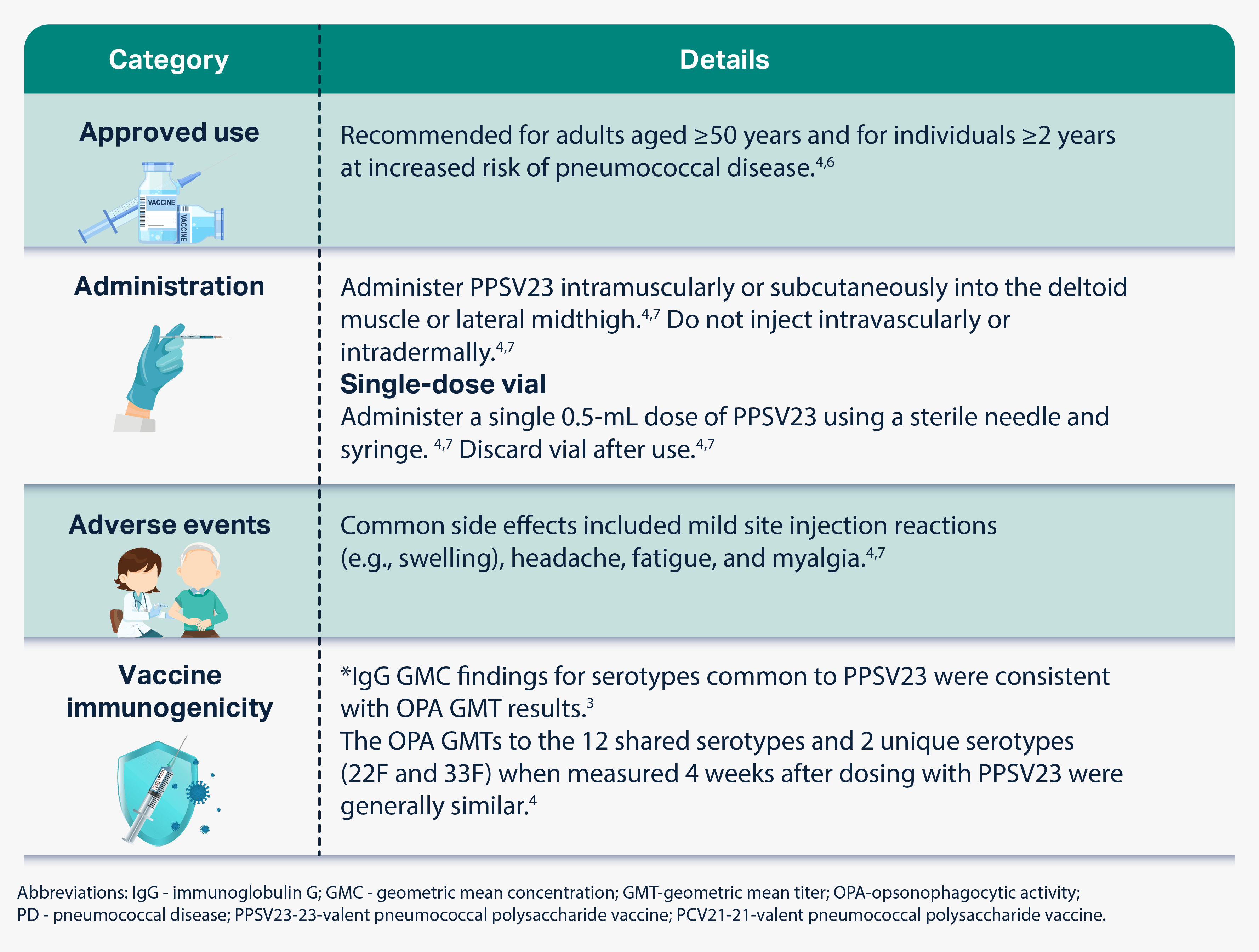
Invasive pneumococcal disease (IPD) presents a significant public health challenge in the Gulf Cooperation Council (GCC) region, particularly affecting vulnerable populations such as young children and individuals with chronic conditions.1In 2021, pneumonia and other lower respiratory tract infections (LRTIs) were responsible for approximately 2.18 million deaths globally, with the highest mortality rates observed in children under five, older adults over 70 years, and individuals with comorbidities.1Strengthening surveillance, expanding local research, and improving vaccination strategies tailored to the region’s unique demographic and healthcare landscape are essential for mitigating IPD burden.1Despite ongoing vaccination efforts, inconsistent vaccine coverage and limited surveillance continue to pose significant challenges.1 23-valent pneumococcal polysaccharide vaccine (PPSV23) is designed to prevent IPD caused by 23 pneumococcal serotypes.2
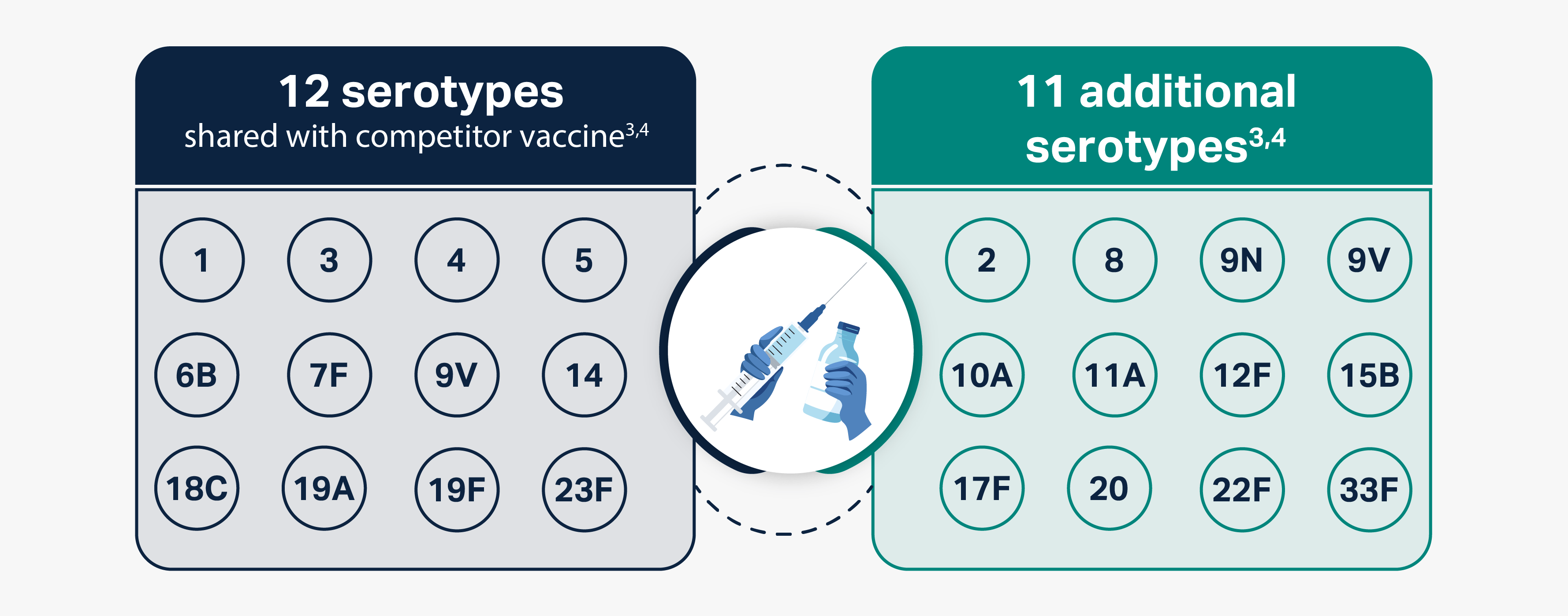
PPSV23 induces serotype-specific antibodies to all serotypes included in the vaccine.5
Study design overview
- Study methodologyThis phase 3 randomized, double-blind trial conducted at 20 clinical sites in the United States to compare the safety, tolerability, and immunogenicity profiles of a sequential administration of PCV13 followed by PPSV23, given either 2 months or 6 months later in pneumococcal vaccine-naïve adults ≥50 years of age.5
- Patient population
A total of 400 community-dwelling adults were randomly assigned to 2 different intervention groups.5
3.InclusioncriteriaKey eligibility criteria were no previous pneumococcal vaccination, stable underlying medical condition, and absence of protocol-defined known or suspected immunocompromising conditions (e.g. HIV infection, generalized malignancy).5
4.Study treatmentGroup-1: received PCV13 on day 1, PPSV23 at week 8 (month 2), and placebo (saline solution) at week 26 (month 6).5
Group-2: received PCV13 on Day 1, placebo at week 8 (month 2), and PPSV23 at week 26 (month 6).5 - Study duration
The study was conducted between september2014 and july2015.5 - Primary endpoint
Study primary immunogenicity hypotheses were based on serotypes evaluated using validated MOPA-4 assay, aimed at demonstrating that Group #1 was superior to Group #2 based on OPA GMTs measured at Week 12 for 2 serotypes unique to PPSV23 (serotypes 22F and 33F) and Group #1 was noninferior to group -2 based on serotype-specific OPA GMTs measured for the 12 shared serotypes between PCV13 and PPSV23 at week 12.5 - Secondary endpoint
Additional secondary objectives included OPA GMTs at weeks 8, 26, and 30 as well as summaries of geometric mean fold-rises, the proportion of subjects with ≥4-fold rise from baseline to week 12 and week 30 and in each intervention group, and reverse cumulative distribution curves (RCDCs) at the different timepoints up to week 30 for the 12 shared serotypes between PCV13 and PPSV23 as well as the 6 serotypes unique to PPSV23.5
*Study design overview
- Study methodology
A randomized, active comparator-controlled, parallel-group, multisite, double-blind study to evaluate the safety, tolerability, and immunogenicity of PCV21 in pneumococcal vaccine-naïve adults ≥50 years of age.3
2.Patient population
Adults ≥50 years of age, at least 50% of enrolled participants were ≥65 years of age.3A total of 1484 participants were randomized, and 1480 participants were vaccinated.3 - Inclusion and exclusion criteria
Inclusion criteria: Eligible participants were adults ≥50 years of age who had not previously received any pneumococcal vaccine.3
Exclusion criteria :Participants were excluded if they had a history of IPD, known or suspected impairment of immunological function, or had received systemic corticosteroids or any form of current immunosuppressive therapy.3 - Study treatmentParticipants were randomly assigned 1:1 to receive a single intramuscular dose of either PCV21 or PPSV23.3
- Study duration
The study was conducted from november 2022 to october 2023. - Primary endpoint
Primary immunogenicity endpoints, including serotype-specific OPA GMT ratios and ≥4-fold rises in OPA responses for the nine PCV21-unique serotypes at 30 days post-vaccination, were generally consistent across age subgroups and the overall population.3 - Secondary endpointSecondary immunogenicity outcomes were to evaluate the serotype-specific IgG geometric mean concentrations (GMCs) at 30 days post-vaccination with PCV21 and PPSV23, the proportions of participants with a ≥4-fold rise in serotype-specific cross-reactive OPA responses from baseline to 30 days post-vaccination for serotypes within a serogroup in PCV21.3
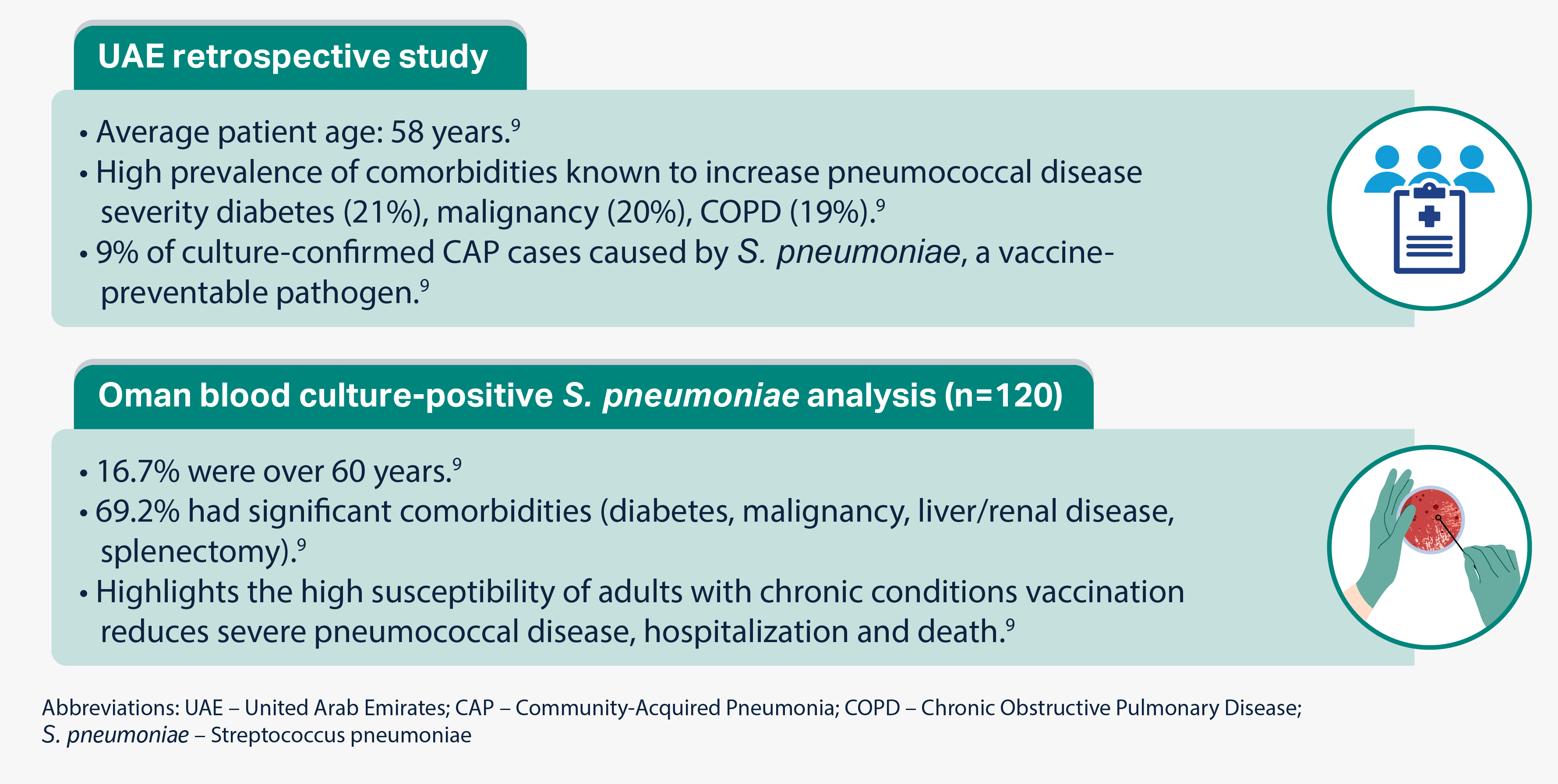
World Health Organization (WHO) prioritizes childhood vaccinations but also recommends that all countries with a mature childhood pneumococcal immunization program should prepare evidence-based guidelines outlining vaccination plans for both older adults and those at-risk.9
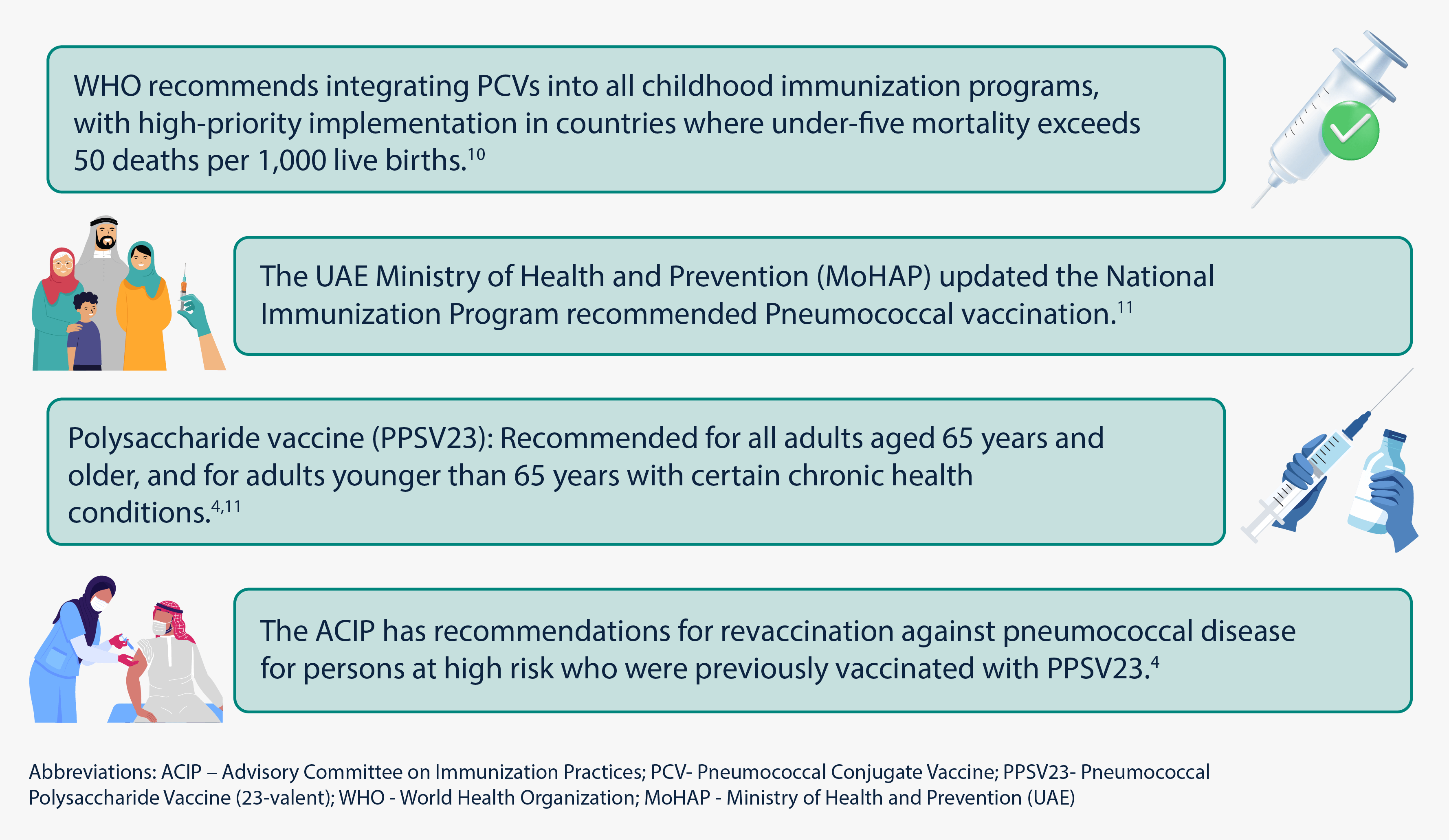
Age and risk-based pneumococcal vaccination schedules within each WHO regions differ by country, age-based guidance differs in the age cut-offs used, risk-based criteria differ in the conditions considered high-risk, and both approaches vary in which vaccines are recommended.9