
KEYTRUDA® in combination with carboplatin and paclitaxel, followed by KEYTRUDA® as a single agent, is indicated for the treatment of adult patients with primary advanced or recurrent endometrial carcinoma.1

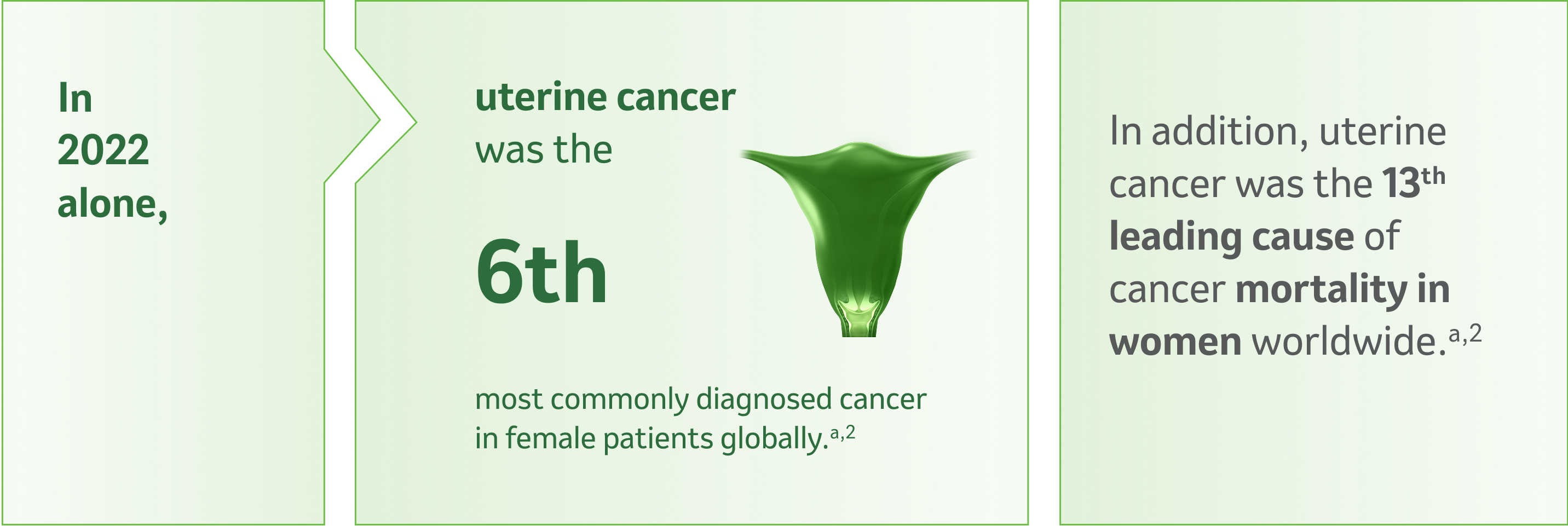
The global burden of cervical and uterine cancers
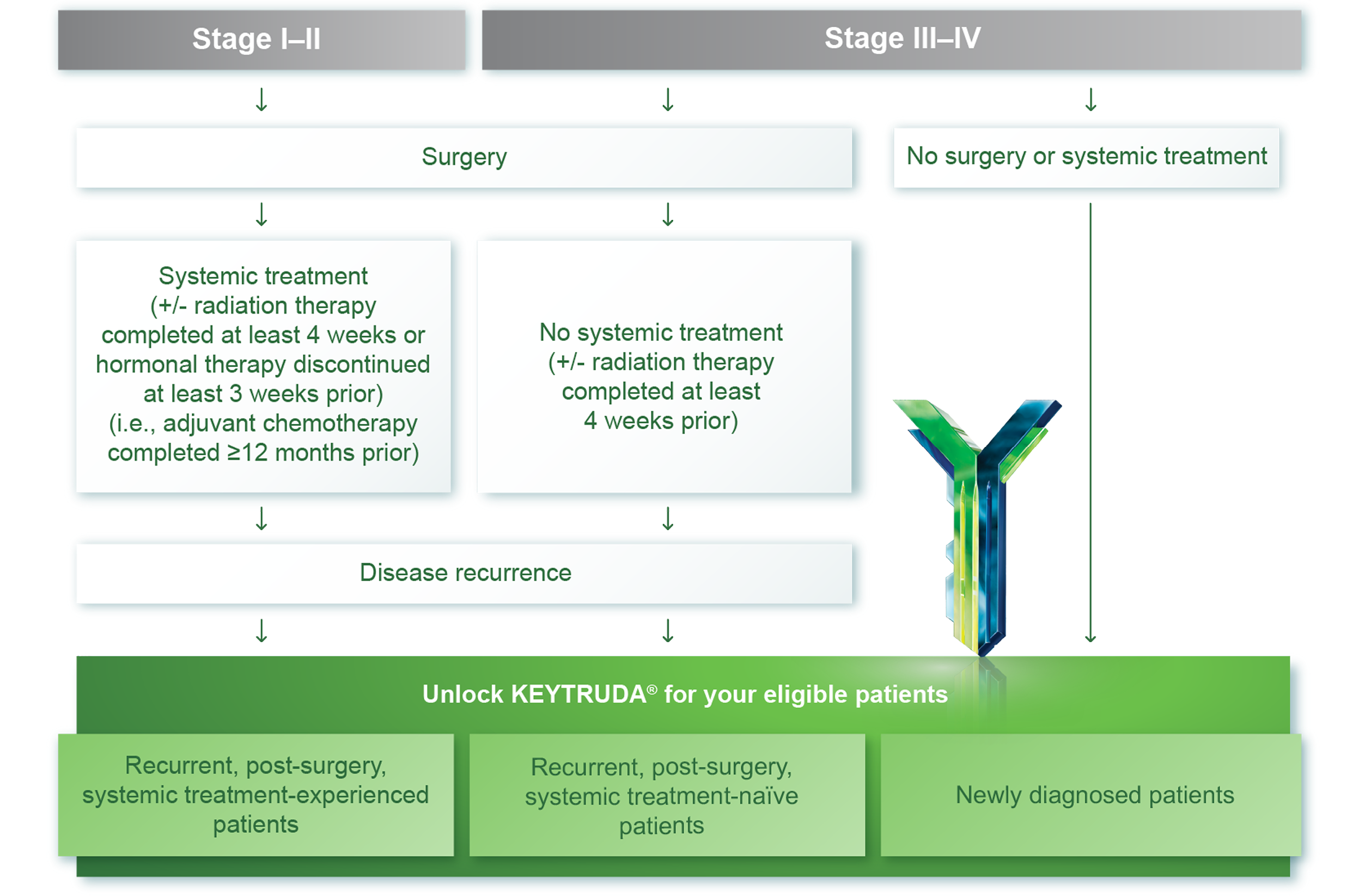
Primary advanced or recurrent endometrial carcinoma
Eligible patients for KEYTRUDA® + chemotherapyb,1,3,4
aEndometrial carcinomas comprises more than 83% of the uterine corpus cancers reported.5
bChemotherapy: paclitaxel and carboplatin. Paclitaxel 175 mg/m2 and carboplatin AUC 5 mg/mL/min for 6 cycles, followed by KEYTRUDA® 400 mg every 6 weeks for up to 14 cycles.1
AUC: area under the curve.
The KEYNOTE-868/NRG-GY018 study

KEYNOTE-868/NRG-GY018 is the first phase III trial with an anti–PD–1 designed to independently assess the statistical significance of outcomes in both pMMR and dMMR populations.6
dMMR: deficient mismatch repair; PD-1: programmed death 1; pMMR: proficient mismatch repair.
In both pMMR and dMMR populations, at the interim analysis KEYTRUDA® + chemotherapyb showed a statistically significant improvement in PFS compared to placebo + chemotherapy.b
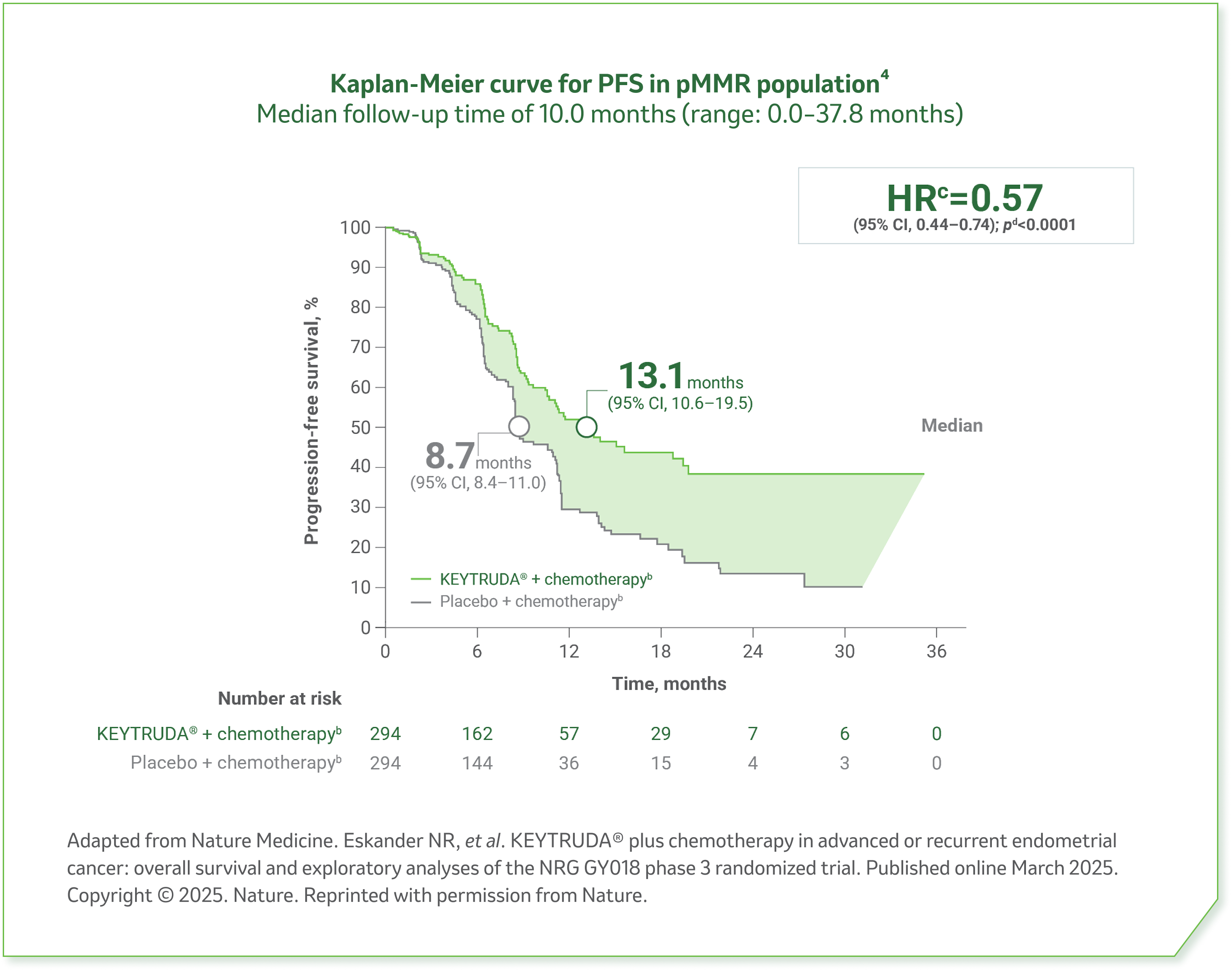

Events observed: 95/294 (32.2%) with KEYTRUDA® + chemotherapyb vs. 138/294 (46.9%) with placebo + chemotherapy.b
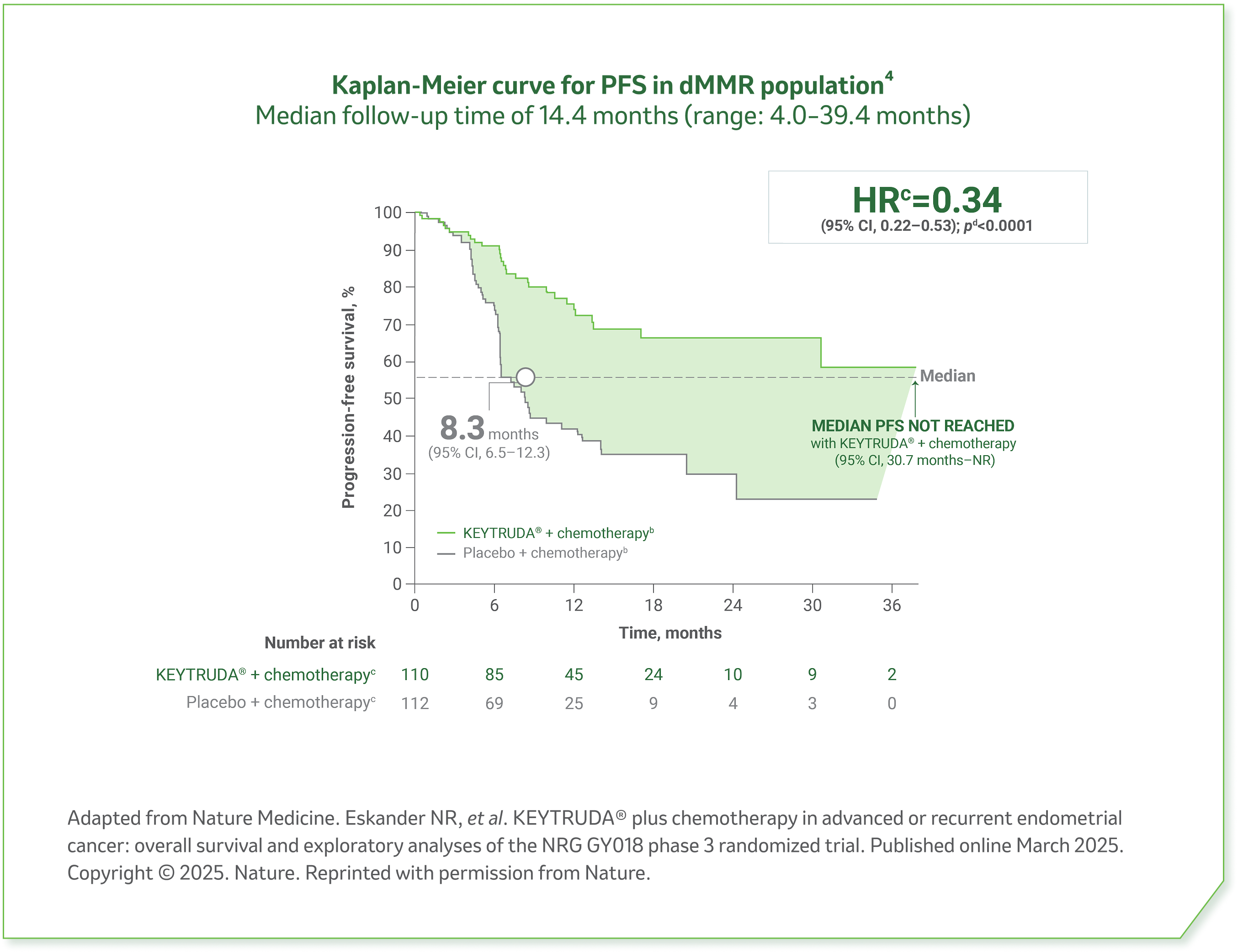
Events observed: 29/110 (26.4%) with KEYTRUDA® + chemotherapyb vs. 60/112 (53.6%) with placebo + chemotherapy.b
bChemotherapy: paclitaxel and carboplatin. Paclitaxel 175 mg/m2 and carboplatin AUC 5 mg/mL/min for 6 cycles, followed by KEYTRUDA® 400 mg every 6 weeks for up to 14 cycles.1
cBased on Cox regression model with the Efron method of tie handling with treatment as a covariate stratified by prior chemotherapy.4
dBased on stratified log-rank test (compared to an alpha boundary of 0.00116 for pMMR and of 0.00207 for dMMR).4
AUC: area under the curve; CI: confidence interval; dMMR: deficient mismatch repair; HR: hazard ratio; NR: not reached; PFS: progression-free survival; pMMR: proficient mismatch repair.
KEYNOTE-868/NRG-GY018 provided insights into the OS (secondary endpoint) of patients treated with KEYTRUDA® + chemotherapyb at ad-hoc analysis.
LIMITATION: The analysis of OS is ongoing as the data are immature, and the OS endpoint was not formally assessed within the multiplicity control. Results should be interpreted with caution. No conclusions can be drawn.
The information fraction was 46.4% in the pMMR population and 29.3% in the dMMR population.
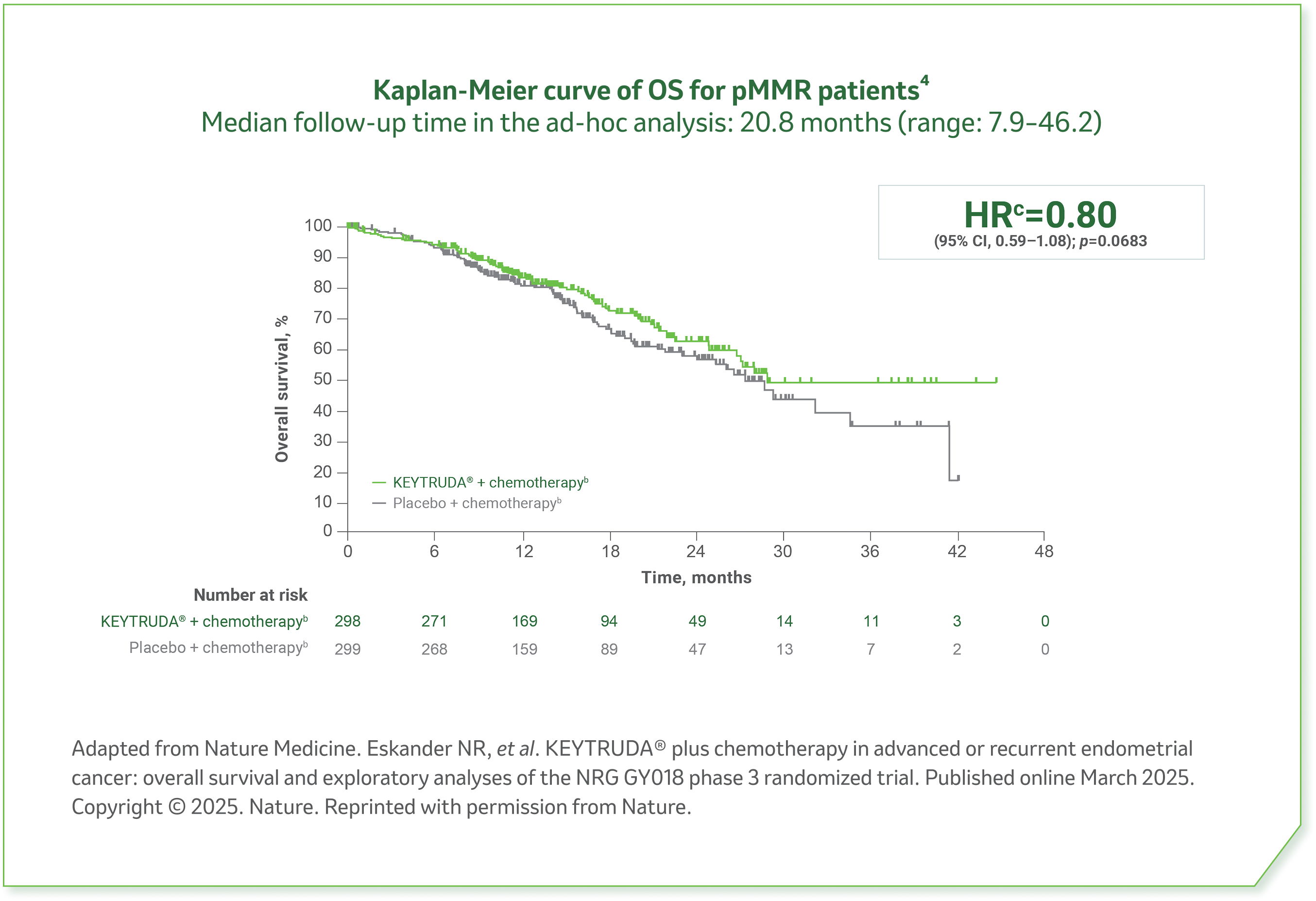
Events observed: 77/298 (25.8%) with KEYTRUDA® + chemotherapyb vs. 92/299 (30.8%) with placebo + chemotherapy.b
Median OS: 28.9 months with KEYTRUDA® + chemotherapyb (95% CI, 26.8–NR) vs. 28.7 months (95% CI, 24.0-34.6) with placebo + chemotherapy.b
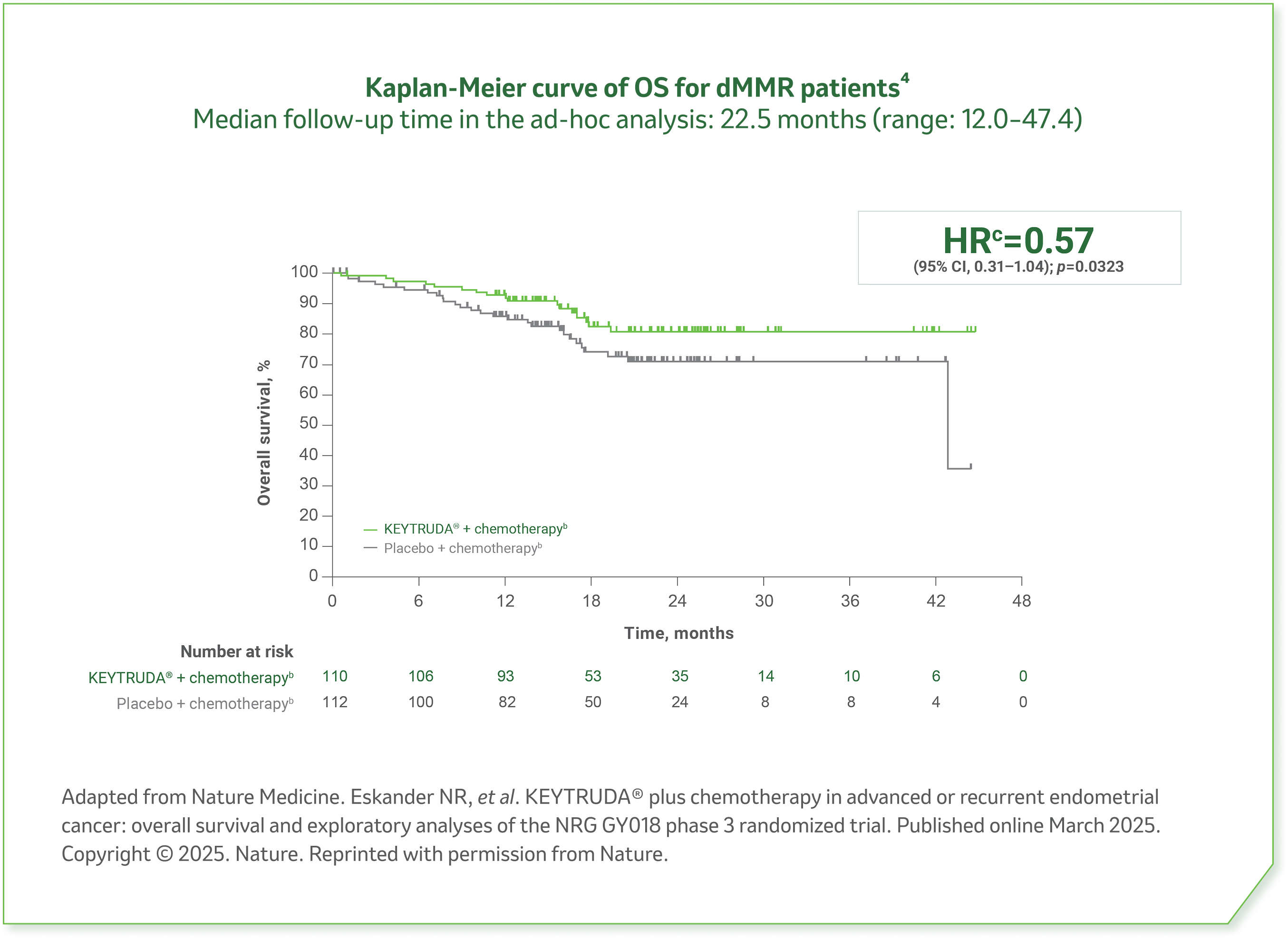
Events observed: 17/110 (15.5%) with KEYTRUDA® + chemotherapyb vs. 27/112 (24.1%) with placebo + chemotherapy.b
Median OS: NR KEYTRUDA® + chemotherapyb (95% CI, NR–NR) vs. 42.7 months (95% CI, 42.7–NR) with placebo + chemotherapy.b
bChemotherapy: paclitaxel and carboplatin. Paclitaxel 175 mg/m2 and carboplatin AUC 5 mg/mL/min for 6 cycles, followed by KEYTRUDA® 400 mg every 6 weeks for up to 14 cycles.1
cBased on Cox regression model with the Efron method of tie handling with treatment as a covariate stratified by prior chemotherapy.4
AUC: area under the curve; CI: confidence interval; dMMR: deficient mismatch repair; HR: hazard ratio; NR: not reached; OS: overall survival; pMMR: proficient mismatch repair.

In patients with recurrent or primary advanced EC receiving KEYTRUDA® + chemotherapy,b AEs were generally similar to those observed with KEYTRUDA® alone or chemotherapyb with the exception of rash (33% all grades; 2.9% grades 3-4).1
pMMR population6
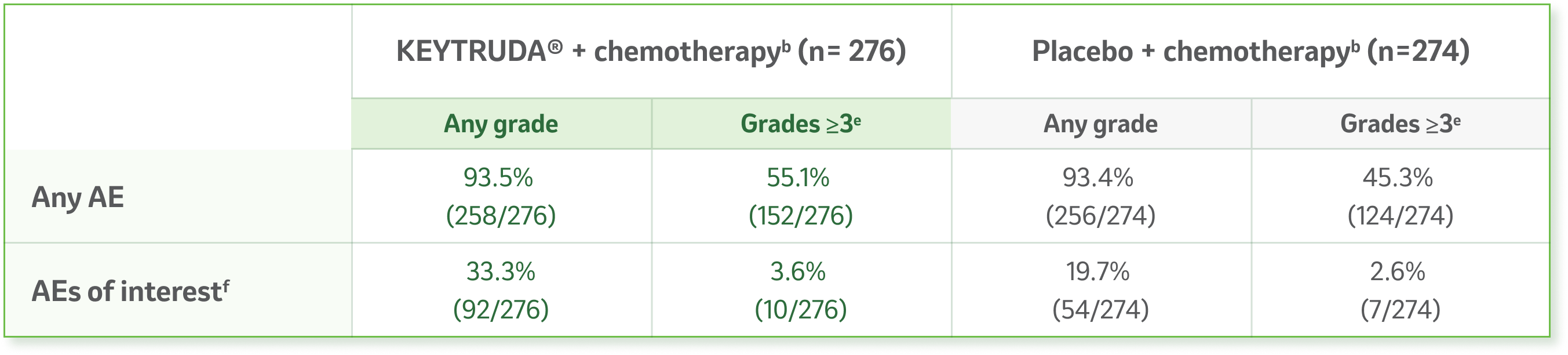
- Common AEs (≥20%) in the KEYTRUDA® + chemotherapyb group: fatigue (63.4%), peripheral sensory neuropathy (55.4%), anemia (55.1%), nausea (43.8%), constipation (43.5%), diarrhea (35.9%), neutropenia (31.5%), thrombocytopenia (30.1%), arthralgia (22.5%), dyspnea (21%), rash (20.7%).
- Common AEs (≥20%) in the placebo + chemotherapyb group: fatigue (60.2%), peripheral sensory neuropathy (57.3%), anemia (52.6%), nausea (41.6%), constipation (38.7%), diarrhea (32.1%), arthralgia (27.4%), neutropenia (26.6%), thrombocytopenia (21.5%).
dMMR population6
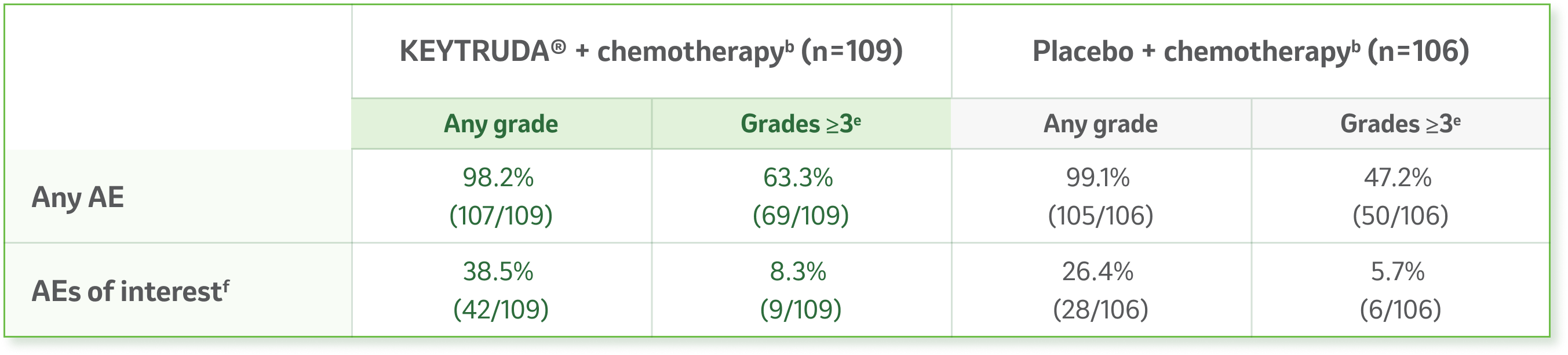
- Common AEs (≥20%) in the KEYTRUDA® + chemotherapyb group: fatigue (71.6%), peripheral sensory neuropathy (65.1%), anemia (57.8%), nausea (50.5%), constipation (43.1%), diarrhea (42.2%), thrombocytopenia (34.9%), arthralgia (29.4%), dyspnea (27.5%), myalgia (26.6%), neutropenia (25.7%), vomiting (20.2%).
- Common AEs (≥20%) in the placebo + chemotherapyb group: peripheral sensory neuropathy (62.3%), fatigue (55.7%), anemia (54.7%), nausea (41.5%), constipation (37.7%), diarrhea (34.0%), neutropenia (32.1%), thrombocytopenia (29.2%), arthralgia (29.2%).
bChemotherapy: paclitaxel and carboplatin. Paclitaxel 175 mg/m2 and carboplatin AUC 5 mg/mL/min for 6 cycles, followed by KEYTRUDA® 400 mg every 6 weeks for up to 14 cycles.1
eEight patients (1.5%) in the pMMR cohort (six in the KEYTRUDA® group and two in the placebo group) died from Grade 5 AEs: sepsis in four patients, cardiac arrest in two patients, and small intestinal obstruction and sudden death not otherwise specified in one patient each. Three patients (1.4%) in the dMMR cohort (one in the KEYTRUDA® group and two in the placebo group) died from Grade 5 AEs: cardiac arrest, sepsis, and lower gastrointestinal hemorrhage in one patient each.6
fThe events of interest are those with a possible immune-related cause and are considered regardless of attribution by the investigator. Some patients may have had more than one AE of interest.6
AE: adverse event; AUC: area under the curve; dMMR: deficient mismatch repair; EC: endometrial carcinoma; pMMR: proficient mismatch repair.


Think KEYTRUDA® from the start in rNSCLC
For your eligible rNSCLC patients, start with KEYTRUDA® in the neoadjuvant setting —and continue with KEYTRUDA® after surgery. Review KEYNOTE-671 data to see OS benefits for your patients.

References:
1. KEYTRUDA®. Prescribing Information. 2. Ferlay J, Ervik M, Lam F, et al. Global Cancer Observatory: Cancer Today. Lyon, France: International Agency for Research on Cancer. 2024. Available at: https://gco.iarc.who.int/today. Accessed November 16, 2025. 3. Eskander RN, Sill MW, Beffa L, et al. Pembrolizumab plus chemotherapy in advanced endometrial cancer. Supplementary appendix. N Engl J Med 2023. 4. Eskander RN, Sill MW, Beffa L, et al. Pembrolizumab plus chemotherapy in advanced or recurrent endometrial cancer: overall survival and exploratory analyses of the NRG GY018 phase 3 randomized trial. Nat Med. 2025;31(5):1539-46. 5. Mahdy H, Vadakekut ES, Crotzer D. Endometrial cancer. StatPearls. Treasure Island (FL): StatPearls Publishing Copyright © 2025, StatPearls Publishing LLC.; 2025. 6. Eskander RN, Sill MW, Beffa L, et al. Pembrolizumab plus chemotherapy in advanced endometrial cancer. N Engl J Med 2023;388:2159-70.
AE-KEY-00992 I Expiry date: 16.11.2027