Immunization Across Life: The Role of HPV Vaccination
Human papillomavirus (HPV) is one of the most prominent oncogenic viruses, causing various cancer cases, including cervical, anal, vulvar, and oropharyngeal cancers.1 Methods of preventing HPV are mainly targeted at preventing exposure to the virus; however, vaccines developed from virus-like particles can increase B-cell immunity by changing the type of antibodies in circulation.2 HPV vaccines have the potential to prevent numerous infections and reduce the burden of certain HPV-related diseases.1
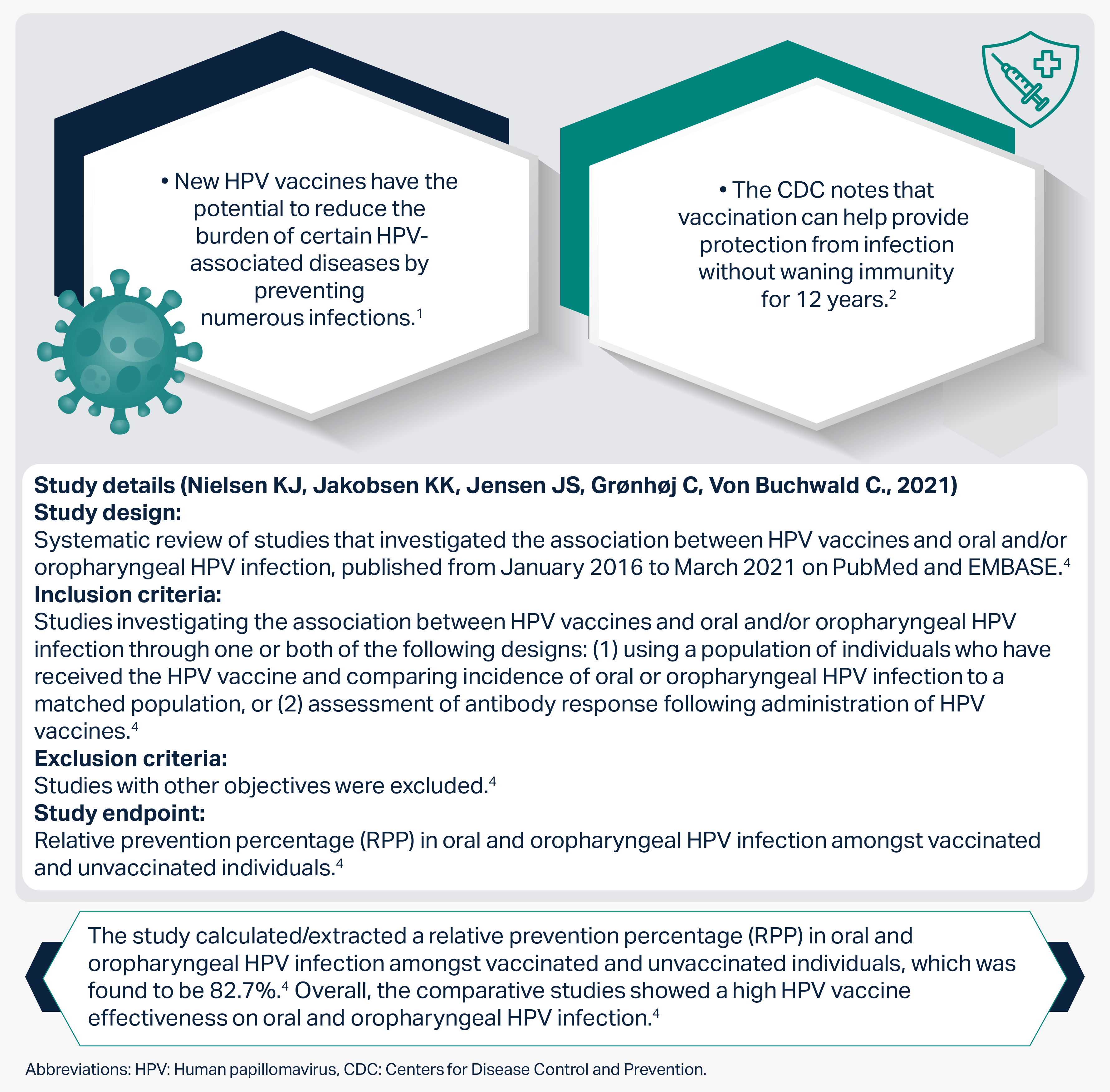
Persistent HPV infection may potentially cause cervical, anal, vulvar, vaginal and oropharyngeal cancers.2 Therefore, it is essential that prophylactic HPV vaccination is available to reduce the HPV related morbidity and mortality.3 The following figure discusses the prevention of certain HPV-associated cancers and their prevention through vaccination with trial evidence.1,2,4
HPV vaccine and cancer risk reduction
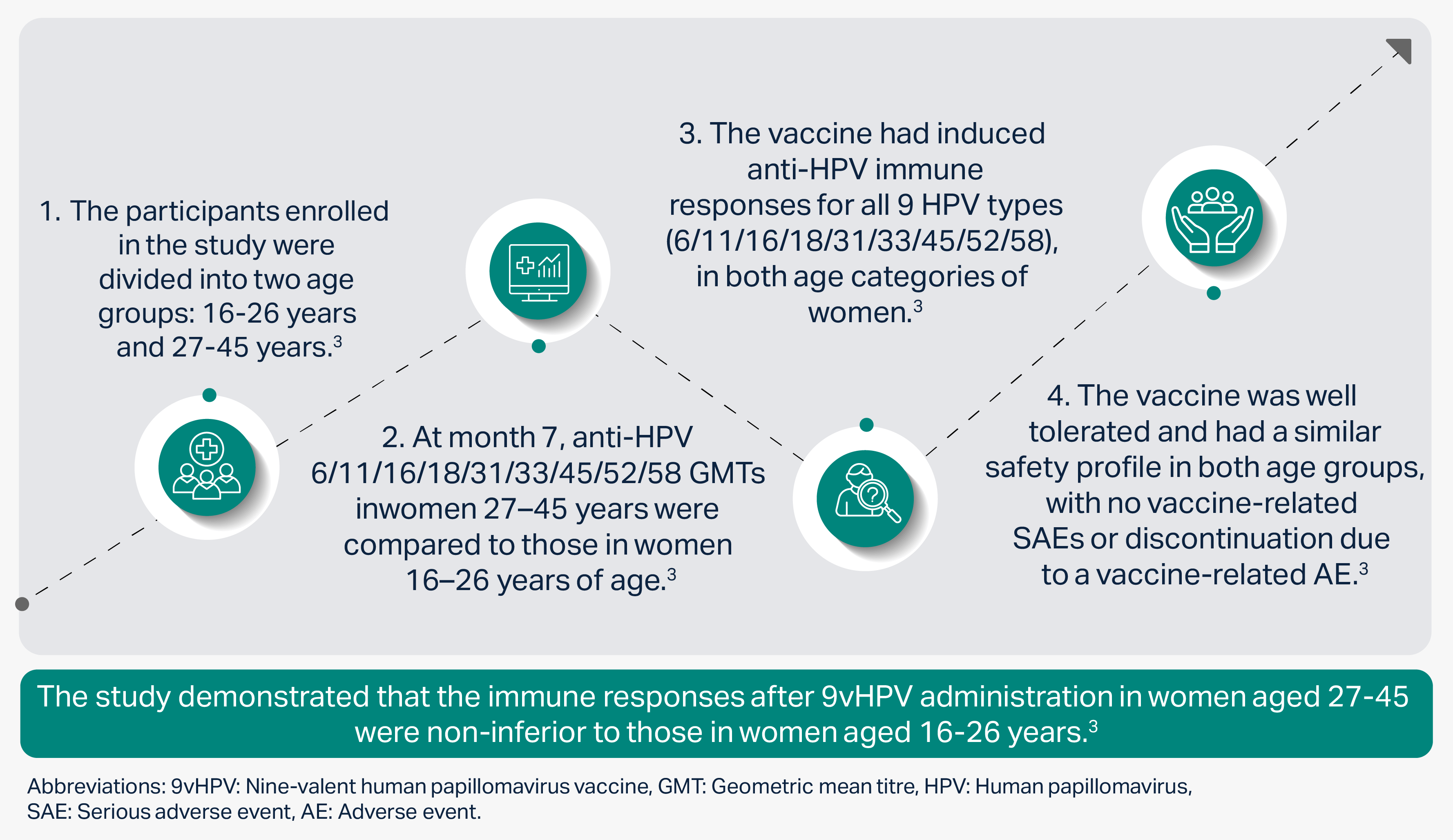
The vaccine was studied in more than 15000 males and females and was found to be safe and effective in the participants.5 The following is an overview of a trial evaluating the nine-valent human papillomavirus vaccine (9vHPV) responses in women aged 16-26 and 27-45.3
Study details (Joura EA, Ulied A, Vandermeulen C, et al., 2021
Study design:
The trial was an international, open-label, 7-month study conducted at 24 study sites in 7 countries.3
Inclusion criteria:
Healthy women aged 16-45 years who had never received a prophylactic HPV vaccine, had no history of abnormal Papanicolaou test or cervical biopsy results, no history of genital warts, and no history of a positive test for HPV.3
Exclusion criteria:
Participants were excluded from the per protocol immunogenicity (PPI) population if they received immunosuppressives, immunoglobulin G (IgG), or blood products; were enrolled in another clinical study of investigational agents; received non-study vaccination; failed to complete the three-dose regimen; missed serology samples/results at day 1 or month 7; were vaccinated 2 or 3 outside the acceptable day range; serum samples collected outside the acceptable day 1 or month 7 range; and day 1 positivity.3
Study treatment:
A three-dose regimen of 9vHPV vaccine on day 1, month 2, and month 6.3 The vaccine was administered as a 0.5-mL intramuscular injection into the deltoid muscle of the non-dominant arm.3
Study duration and follow-up:
The study was conducted for 7 months, participants were monitored for at least 15 minutes after each study vaccination, and they were followed for safety throughout the study.3
Primary endpoints:
The primary objective of the study was to demonstrate that administration of the 9vHPV vaccine in women aged 27-45 years induces non-inferior geometric mean titers (GMTs) for serum anti-HPV 16/18/31/33/45/52/58 compared with women aged 16-26 years at 4 weeks after vaccine Dose 3.3
Secondary endpoints:
To demonstrate that the 9vHPV vaccine was immunogenic with respect to HPV 16/18/31/33/45/52/58, in women 27-45 years of age and to summarize humoral immune response parameters (GMTs and seroconversion percentages) in women 16-26years of age and women 27-45years of age.3
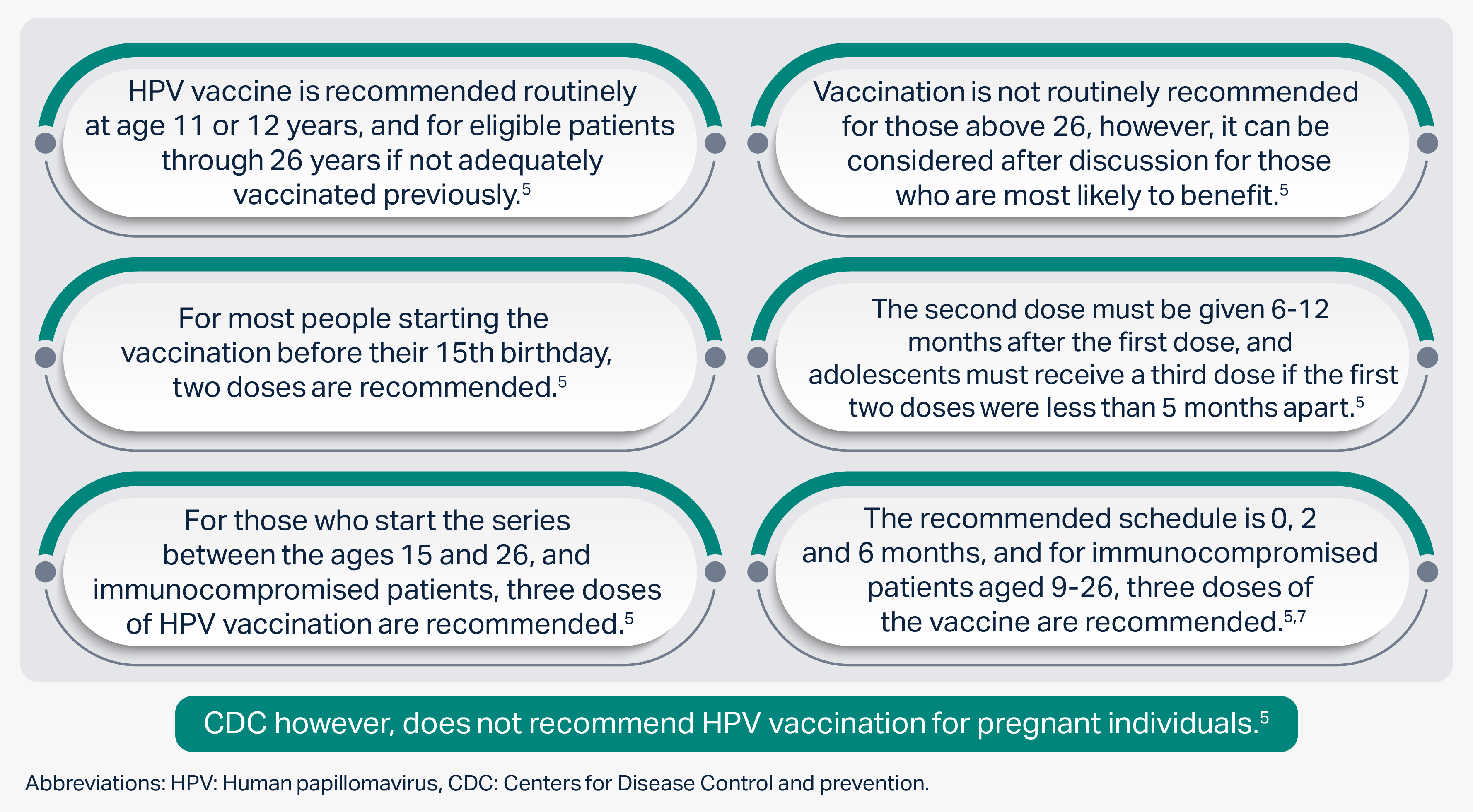
Vaccination against HPV is recommended to prevent new HPV infections or HPV-associated diseases, including cancers.6 Centers for Disease Control and Prevention’s (CDC) Advisory Committee on Immunization Practices (ACIP) reviews relevant data once available and provides updates to the vaccination policy as required.6