
Go Beyond Surveillance for the Possibility of Increased Survival1
KEYTRUDA® (pembrolizumab) as monotherapy is indicated for the adjuvant treatment of adults with renal cell carcinoma at increased risk of recurrence following nephrectomy, or following nephrectomy and resection of metastatic lesions.1
Now may be the time to rethink postsurgical care and consider KEYTRUDA®, with its demonstrated disease-free survival (DFS) and overall survival (OS) benefits vs placebo.1
DFS at First Prespecified Interim Analysisa: Primary efficacy outcome measure2
32% reduction in the risk of disease recurrence or death with KEYTRUDA® vs placebo
HRb=0.68 (95% CI: 0.53–0.87); Pc=0.002 (two-sided).2
- Events observed: 21.9% (109/496) with KEYTRUDA® vs 30.3% (151/498) with placebo.2
- Median DFS: Not reached for KEYTRUDA® or placebo.2
- Median follow-up at First Interim Analysis: 24.1 months (range: 14.9 to 41.5).2
OS at Third Interim Analysisa: Key secondary outcome measure3
38% reduction in the risk of death with KEYTRUDA® vs placebo3
HRd=0.62 (95% CI: 0.44–0.87); P=0.005.3
- Events observed: 11.08% (55/496) with KEYTRUDA® vs 17.26% (86/498) with placebo.3
- 48-month OS estimated rate: 91.2% with KEYTRUDA® vs 86.0% with placebo.3
- Median follow-up at Third Interim Analysis: 57.2 months (range: 47.9 to 74.5).3
aAssessed in the intention-to-treat (ITT) population.
bBased on the stratified Cox proportional hazard model.2
cP value based on stratified log-rank test.2
dHazard ratios and two-sided 95% CIs were estimated with the use of a stratified Cox regression model for overall survival at the Third Interim Analysis.3
CI: confidence interval; DFS: disease-free survival; HR: hazard ratio; ITT: intention-to-treat; OS: overall survival; RCC: renal cell carcinoma.
KEYTRUDA® is the ONLY approved adjuvant treatment for appropriate patients at increased risk of RCC recurrence post surgery.1,2
Some patients may need more than surgery alone.4
Two retrospective analyses looked at more than 1,000 patients with RCC at an increased risk of recurrence.
Approximately half of those studied experienced a recurrence post nephrectomy, with the vast majority of these recurrences being metastatic disease.4,5,6
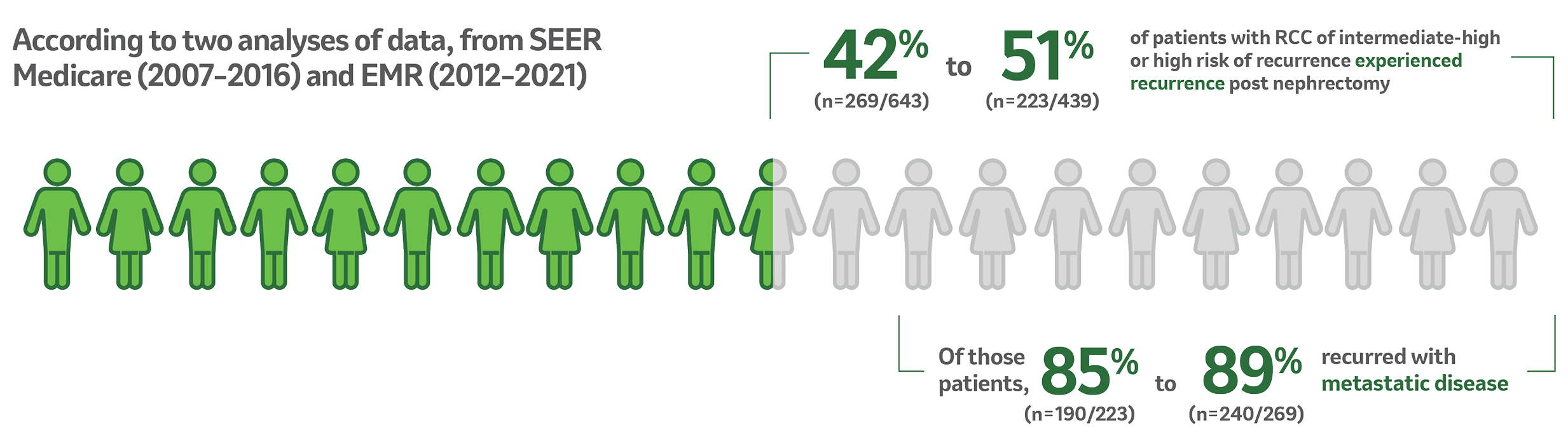
Retrospective analysis of SEER-Medicare data from 643 patients from 2007 to 20164
Analysis population4,5
Eligible patients were adults (age ≥66 years at first diagnosis of RCC) diagnosed with nonmetastatic RCC between
January 2007 to December 2015. The intermediate-high risk category included: T2, Grade 4, N0, M0; and T3, any
grade, N0, M0. The high-risk category included: T4, any grade, N0, M0; and any T, any grade, N+, M0. 95% of patients analysed had T3 tumours. Median follow-up duration of 23 months.
Analysis limitations4
Recurrence was inferred from the database codes rather than directly determined based on clinical data. The analysed SEER-Medicare data represent patients ≥65 years of age. Hence, the results from this analysis may not reflect outcomes among the younger patient population. Impacts of recurrence may be confounded by unmeasured characteristics. Caution must be used when considering causal inference from this analysis.
Retrospective, observational analysis of EMR data of 439 patients from 2012 to 20216
Patients at an increased risk of recurrence who did experience a recurrence were 2.4 times more likely to die within 5 years of nephrectomy compared to patients at an increased risk of recurrence who did not experience a recurrence.
Analysis population6
Eligible patients were adults (aged ≥18 years) diagnosed with non-metastatic RCC between 1 January 2012 and 31 December 2017 to allow for the potential of a 3-year follow-up period. The intermediate-high risk category included: T2, N0, M0 with Grade 4 cells or sarcomatoid histology; or T3, N0, M0. The high-risk category included: T4, N0, M0; or any T stage with N ≥1, M0. Median follow-up duration of 39 months.
Analysis limitations6
Data sourced principally from community oncology practices, representing diverse practice locations, both rural and urban centres, within the US. Data from these practices was provided to the ConcertAI Oncology Dataset. Therefore, imaging assessments, procedures or visits outside of this network may not have been captured.
EMR: electronic medical record; M0: no distant metastasis; N: lymph node involvement; N+: regional lymph node metastasis; N0: no regional lymph node metastasis; RCC: renal cell carcinoma; SEER: Surveillance, Epidemiology, and End Results; T: primary tumour; T2: tumour >7 cm in greatest dimension, limited to the kidney; T3: tumour extends into major veins or peripheral tissues, but not into the ipsilateral adrenal gland and not beyond Gerota’s fascia; T4: tumour invades beyond Gerota’s fascia (including contiguous extension into the ipsilateral adrenal gland); US: United States.
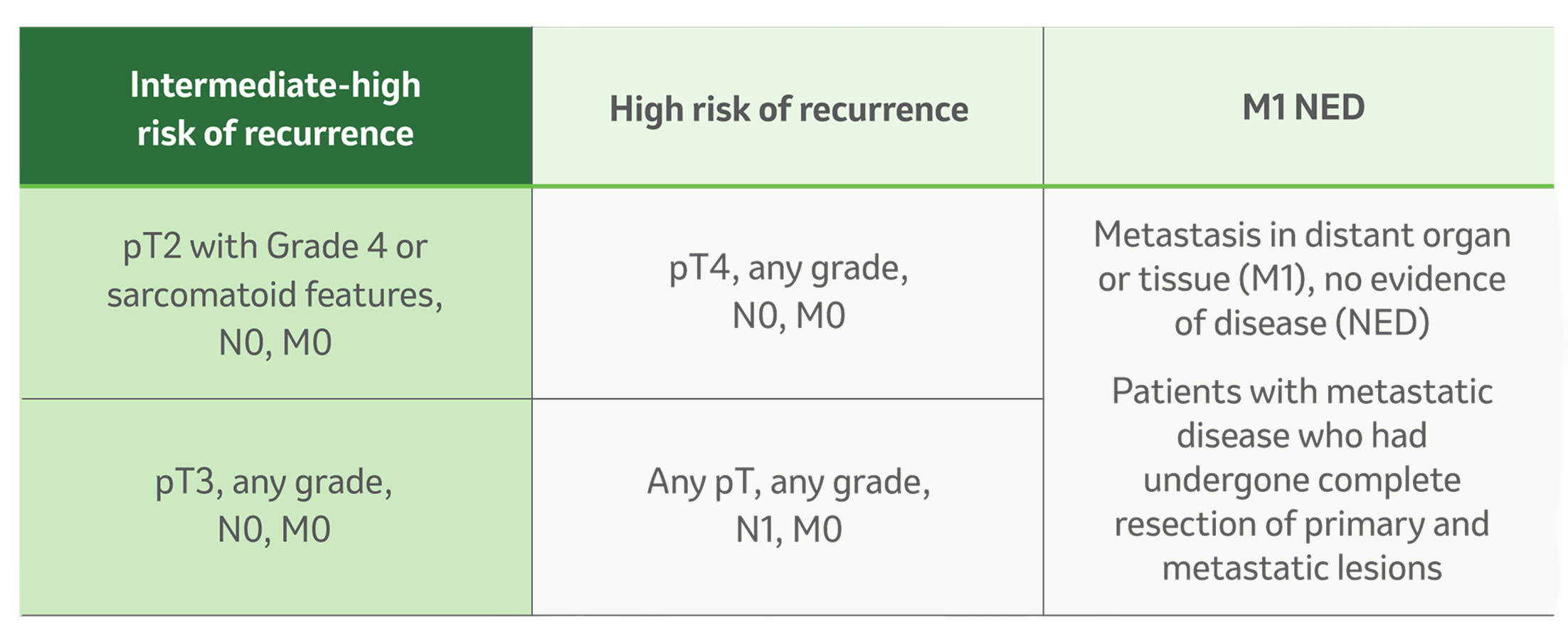
In KEYNOTE-564, the majority of patients studied were at intermediate-high risk of recurrence post nephrectomy.2

Patient inclusion criteria2

Patient exclusion criteria7
- Patients who had undergone any major surgery other than nephrectomy/metastasectomy within 12 weeks prior to randomisation, prior radiation therapy for renal cell carcinoma, or prior anti-PD-1/PD-L1/PD-L2/CTLA-4 therapy.
- Patients diagnosed with immunodeficiency, active autoimmune disease, history of or current pneumonitis, active infection requiring systemic therapy, or a known additional malignancy that was progressing or required active treatment within the past 3 years.
- Patients with M1 disease were excluded if bone or brain metastasis were the sites resected.
In KEYNOTE-564, 86.1% (n/N=427/496) in the KEYTRUDA® (pembrolizumab) group and 86.9% (n/N=433/498) in the placebo group were intermediate-high risk (pT2 with Grade 4 or sarcomatoid features or pT3).2
Study population characteristics: KEYTRUDA® (pembrolizumab) group (n=496)
The total number of patients was 9942

- 92.5% (459/496) of patients in the KEYTRUDA® arm and 92.4% (460/498) of patients in the placebo arm had a radical nephrectomy.7
- 7.5% (37/496) of patients in the KEYTRUDA® arm and 7.6% (38/498) of patients in the placebo arm had a partial nephrectomy.7
CTLA-4: cytotoxic T-lymphocyte-associated protein 4; ECOG PS: Eastern Cooperative Oncology Group performance status; M0: no distant metastasis; M1: distant metastasis present; N0: no regional lymph node metastasis; N1: involvement of regional lymph nodes; NED: no evidence of disease; PD-1: programmed cell death protein 1; PD-L1: programmed death ligand 1; PD-L2: programmed death ligand 2; T2: tumour >7 cm in greatest dimension, limited to the kidney; T3: tumour extends into major veins or peripheral tissues, but not into the ipsilateral adrenal gland and not beyond Gerota’s fascia; T4: tumour invades beyond Gerota’s fascia (including contiguous extension into the ipsilateral adrenal gland).

A phase III, multicentre, randomised, double-blind, placebo-controlled study in 994 patients with increased risk of recurrence defined as intermediate-high or high risk, or M1 with NED2
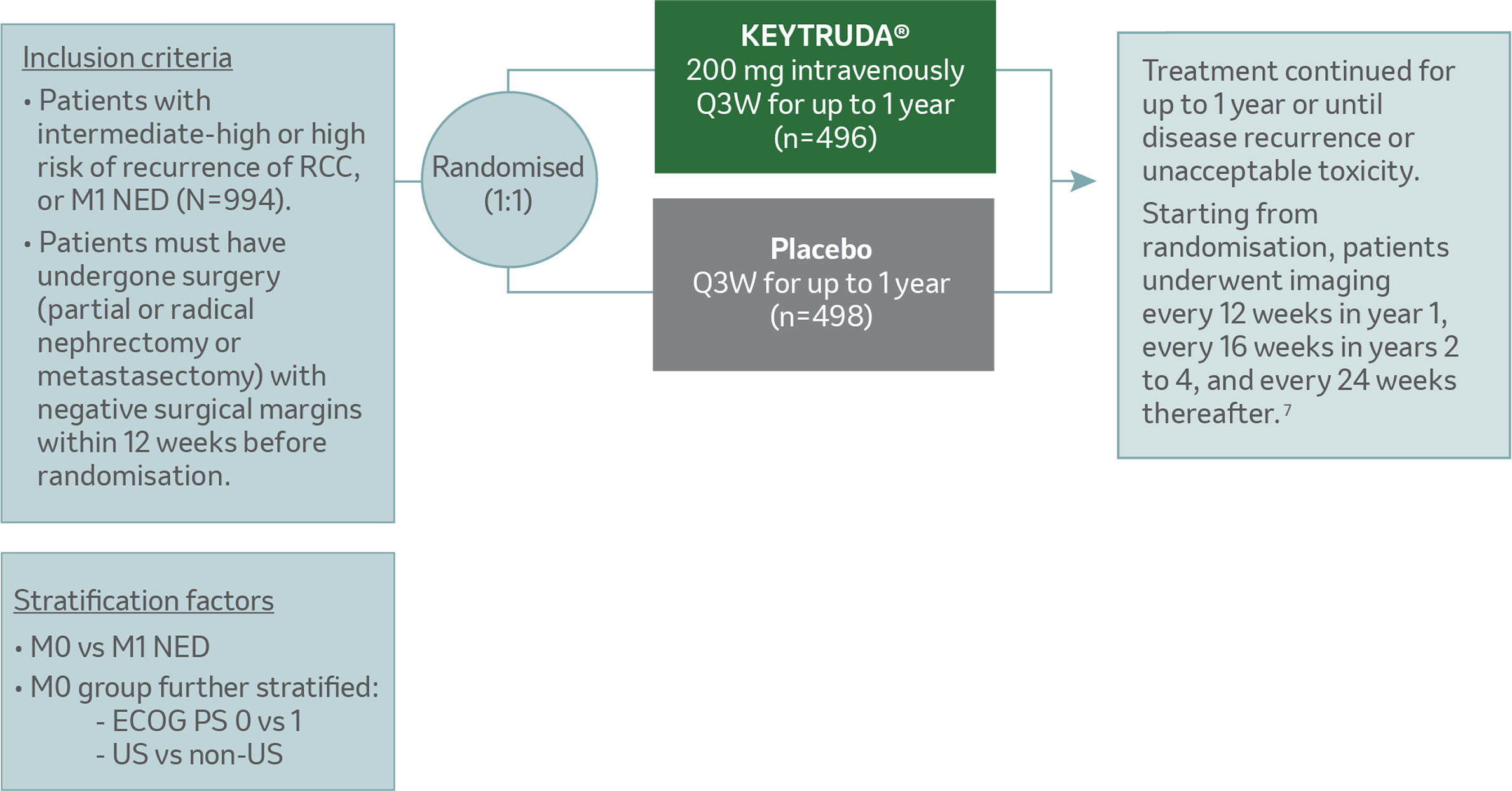
- Primary efficacy outcome measure: Investigator-assessed DFS.2
- Key secondary outcome measure: OS.2
DFS: disease-free survival; ECOG PS: Eastern Cooperative Oncology Group performance status; M0: no distant metastasis; M1: distant metastasis present; NED: no evidence of disease; OS: overall survival; Q3W: every 3 weeks; RCC: renal cell carcinoma; US: United States.
KEYTRUDA® significantly reduced the risk of disease recurrence or death vs placebo.1,2
KEYNOTE-564
DFS at Initial Analysis.a Median follow-up of 24.1 months (range: 14.9 to 41.5).2
Kaplan-Meier estimates of DFS in KEYNOTE-564

From The New England Journal of Medicine, Choueiri T.K., et. al, Adjuvant pembrolizumab after nephrectomy in renal cell carcinoma, Volume 385 No. 8, Page 6. Copyright ©2021 Massachusetts Medical Society. Reprinted with permission from Massachusetts Medical Society.
- HRb=0.68 (95% CI: 0.53–0.87); Pc=0.002 (two-sided).2
- Events observed: 21.9% (109/496) with KEYTRUDA® vs 30.3% (151/498) with placebo.2
- Median DFS: Not reached for KEYTRUDA® or placebo.2
- 12-month DFS rate: 85.7% (95% CI: 82.2–88.5) with KEYTRUDA® vs 76.2% (95% CI: 72.2–79.7) with placebo.2
- 24-month DFS rate: 77.3% (95% CI: 72.8–81.1) with KEYTRUDA® vs 68.1% (95% CI: 63.5–72.2) with placebo.2
- At the time of this initial analysis: 18 deaths out of 496 patients in the KEYTRUDA® arm and 33 deaths out of 498 patients in the placebo arm.2
KEYNOTE-564
DFS at Fourth Interim Analysis.a Median follow-up of 69.5 months (range: 60.2 to 86.9).8
LIMITATIONS: This analysis in KEYNOTE-564 was exploratory in nature. No formal statistical testing was performed. Therefore, no conclusions can be drawn.8
Kaplan-Meier Estimates of DFS in KEYNOTE-564
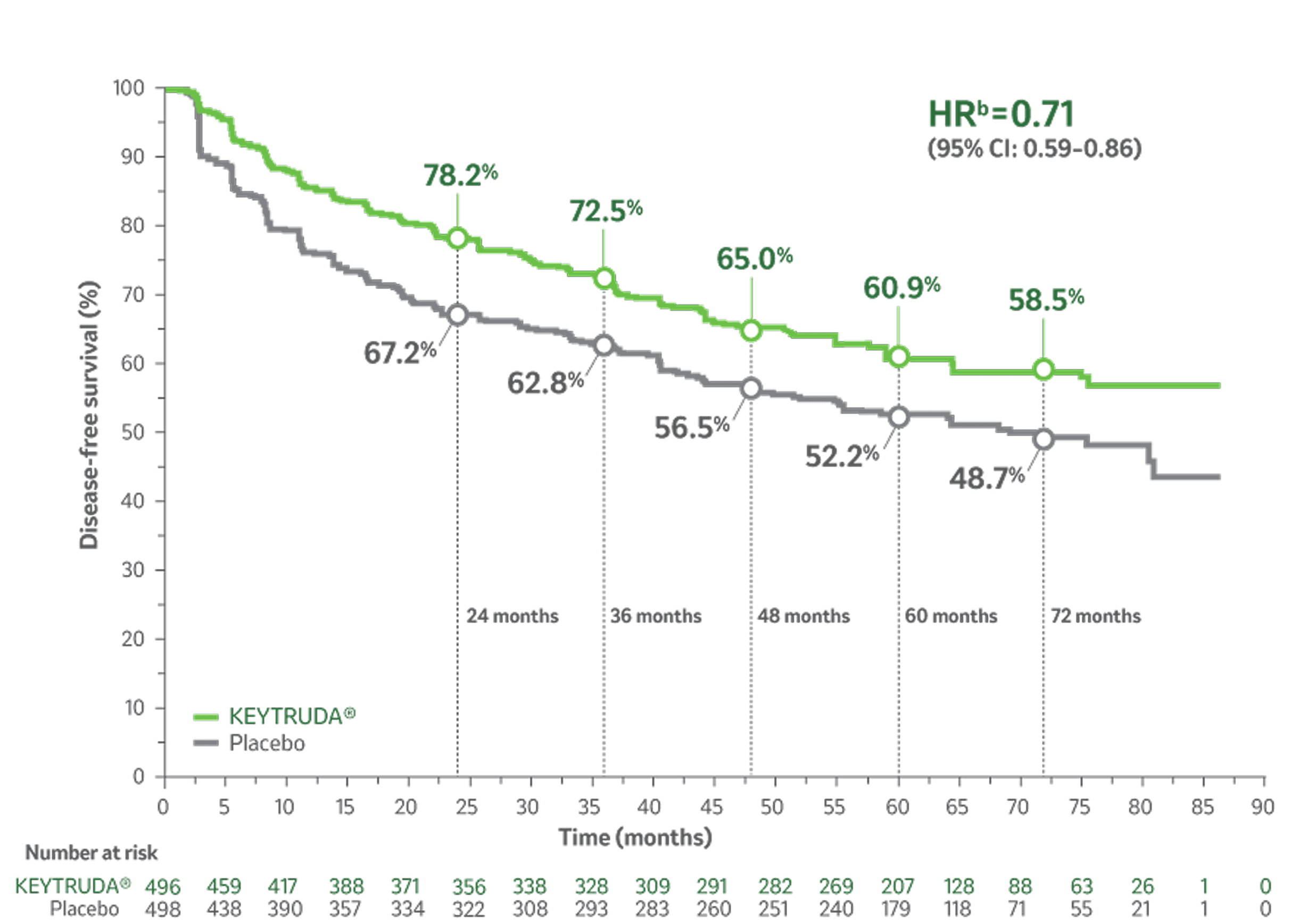
From Haas NB, et al. Presented at ASCO 2025.8
- HRb=0.71 (95% CI: 0.59–0.86).8
- Events observed: 37.9% (188/496) with KEYTRUDA® vs 48.4% (241/498) with placebo.8
- Median DFS: Not reached with KEYTRUDA® and 68.3 months (95% CI: 51.7-NR) with placebo.8
More disease-free time may be possible for appropriate patients with RCC post nephrectomy receiving adjuvant treatment with KEYTRUDA®.1
aAssessed in the intention-to-treat (ITT) population.
bHR based on the stratified Cox proportional hazard model.2
CI: confidence interval; DFS: disease-free survival; HR: hazard ratio; ITT: intention-to-treat; NR: not reached; RCC: renal cell carcinoma.
KEYTRUDA®: Pivotal OS data demonstrating a statistically significant difference vs placebo1,3
KEYNOTE-564
OS at Third Interim Analysis.a Median follow-up of 57.2 months (range: 47.9 to 74.5).3
Kaplan-Meier estimates of OS in KEYNOTE-564 at Third Interim Analysis

From The New England Journal of Medicine, Choueiri T.K., et. al, Overall survival with adjuvant pembrolizumab in renal-cell carcinoma, Volume 390 No. 15, Page 6. Copyright ©2024 Massachusetts Medical Society. Reprinted with permission from Massachusetts Medical Society.
- HRb=0.62 (95% CI: 0.44–0.87); P=0.005.3
- Events observed: 11.08% (55/496) with KEYTRUDA® vs 17.26% (86/498) with placebo.3
- 48-month OS estimated rate: 91.2% with KEYTRUDA® vs 86.0% with placebo.3
- The risk of death was estimated to be 38% lower with KEYTRUDA® vs placebo.3
KEYTRUDA® is an immunotherapy to show a statistically significant improvement in OS as an adjuvant therapy in patients with RCC at increased risk of recurrence after surgery.1,2,3
KEYNOTE-564
OS at Fourth Interim Analysis.a Median follow-up of 69.5 months (range: 60.2 to 86.9).8
LIMITATIONS: This analysis in KEYNOTE-564 was exploratory in nature. No formal statistical testing was performed. Therefore, no conclusions can be drawn.8
Kaplan-Meier estimates of OS in KEYNOTE-564 at Fourth Interim Analysis
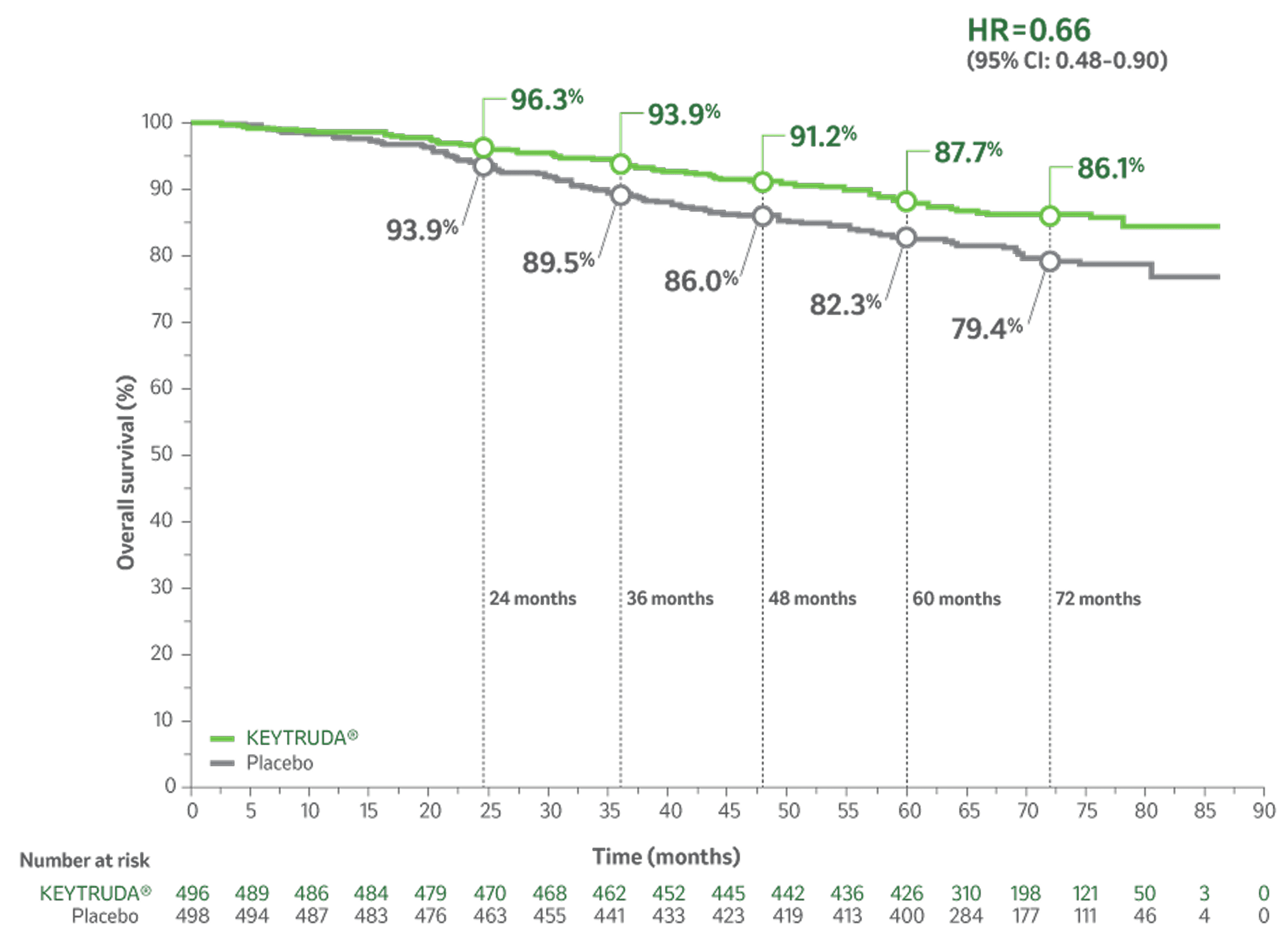
From Haas NB, et al. Presented at ASCO 2025.8
- HR=0.66 (95% CI: 0.48-0.90).8
- Events observed: 13.70% (68/496) with KEYTRUDA® vs 19.87% (99/498) with placebo.8
- Median OS: Not reached for KEYTRUDA® or placebo.8
aAssessed in the intention-to-treat (ITT) population.
bHazard ratios and two-sided 95% CIs were estimated with the use of a stratified Cox regression model for overall survival at the Third Interim Analysis.3
CI: confidence interval; HR: hazard ratio; ITT: intention-to-treat; OS: overall survival; RCC: renal cell carcinoma.
For adjuvant treatment of patients with RCC at increased risk of recurrence following nephrectomy, or following nephrectomy and resection of metastatic lesions.1
Safety profile at initial analysis. Median follow-up of 24.1 months (range: 14.9 to 41.5).2
Any-cause adverse events with an incidence ≥10% in either group (as-treated population)2
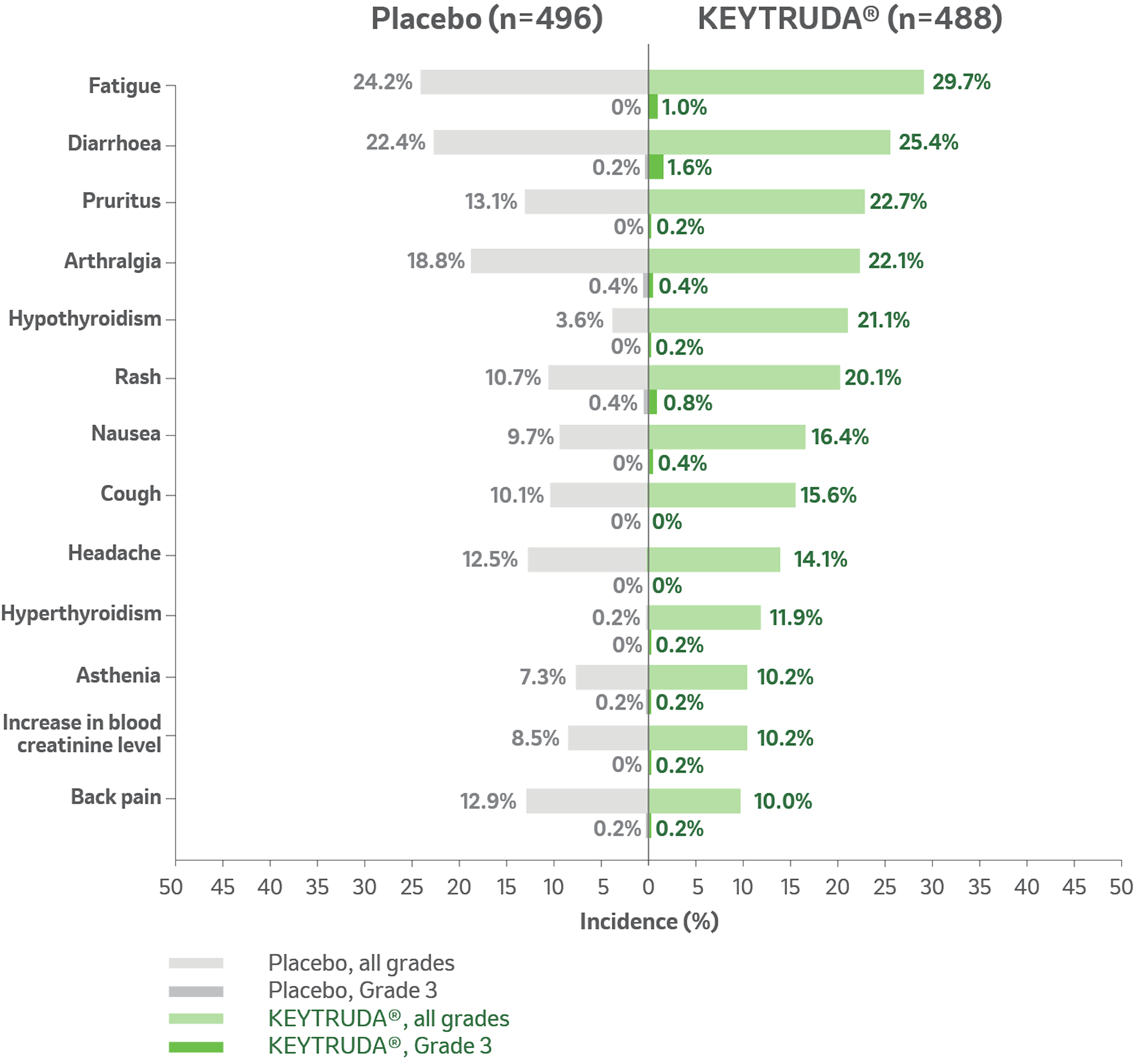
Adapted from Choueiri TK, et al. 2021.2
A total of 994 patients were randomised to receive either adjuvant pembrolizumab (496 patients) or placebo (498 patients) (intent-to-treat population). A total of 488 patients received at least one dose of KEYTRUDA®, and 496 received at least one dose of placebo (as-treated population).2
- No adverse events (AEs) of Grade 4 or 5 occurred in at least 10% of the patients in either group.2
- Safety was assessed in all the patients who received at least one dose of KEYTRUDA® or placebo.2
- The median duration of exposure to KEYTRUDA® was 11.1 months (range: 0.0 to 14.3 months) vs 11.1 months (range: 0.0 to 15.4 months) with placebo.2
- In the as-treated population, 96.3% of patients in the KEYTRUDA® arm had at least one AE of any grade.2
- In total, 32.4% of the patients who received KEYTRUDA® and 17.7% of those who received placebo had an AE of Grade 3 to 5.2
- 79.1% of patients had treatment-related AEs in the KEYTRUDA® arm (18.9% of these patients had Grade 3–5) vs 53.4% in the placebo arm (1.2% Grade 3–5).2
- In the as-treated population, 20.7% of patients in the KEYTRUDA® arm vs 2.0% in the placebo arm discontinued treatment due to AEs.2
-
There were two deaths in the KEYTRUDA® group, which were due to multiple organ dysfunction syndrome and
pneumonia (in one patient each), and one death in the placebo group, which was due to intracranial haemorrhage.2
Immune-mediated adverse reactions1
- Immune-mediated adverse reactions, including severe and fatal cases, have occurred in patients receiving KEYTRUDA®. Most immune-mediated adverse reactions occurring during treatment with KEYTRUDA® were reversible and managed with interruptions of KEYTRUDA®, administration of corticosteroids and/or supportive care. Immune-mediated adverse reactions have also occurred after the last dose of KEYTRUDA®. Immune-mediated adverse reactions affecting more than one body system can occur simultaneously.
-
For suspected immune-mediated adverse reactions, adequate evaluation to confirm aetiology or exclude other
causes should be ensured. Based on the severity of the adverse reaction, KEYTRUDA® should be withheld and corticosteroids administered. Upon improvement to Grade ≤1, corticosteroid taper should be initiated and
continued over at least 1 month. Based on limited data from clinical studies in patients whose immune-mediated adverse reactions could not be controlled with corticosteroid use, administration of other systemic immunosuppressants can be considered. KEYTRUDA® may be restarted within 12 weeks after last dose if the
adverse reaction recovers to Grade ≤1 and corticosteroid dose has been reduced to ≤10 mg prednisone or equivalent per day.
Safety profile at Third Interim Analysis. Median follow-up of 57.2 months.3
- No new serious treatment-related AEs were reported in ≥2 years.
- AEs of any cause led to the discontinuation of the trial regimen for 21.1% (103 participants) in the KEYTRUDA® arm vs 2.2% (11 participants) in the placebo arm.
- KEYTRUDA® was associated with a higher incidence of serious AEs of any cause than placebo (20.7% vs 11.5%), as well as with a higher incidence of AEs of any grade (79.1% vs 53.0%) or of Grade 3 or 4 (18.6% vs 1.2%) that were considered by the investigator to be related to KEYTRUDA® or placebo.
- No deaths were attributed to KEYTRUDA® or placebo.
-
The incidence of immune-mediated AEs and infusion reactions was consistent with previous reports: 36.7% (179
participants) in the KEYTRUDA® arm vs 7.3% (36 participants) in the placebo arm.
AE: adverse event; RCC: renal cell carcinoma.
KEYTRUDA® is recommended as an adjuvant systemic therapy option for patients with RCC at increased risk of recurrence across major guidelines1,9,10

Intermediate-high risk: pT2, Grade 4 or sarcomatoid features, N0, M0; pT3, any grade, N0, M0.2
High risk: pT4, any grade, N0, M0; any pT, any grade, N1, M0.2
M1 NED: NED after resection of oligometastatic sites ≤1 year from nephrectomy.2
Definition of recommendations
ESMO levels of evidence11
I: Evidence from at least 1 large randomised, controlled trial of good methodological quality (low potential for bias) or meta-analyses of well-conducted randomised trials without heterogeneity.
II: Small randomised trials or large randomised trials with a suspicion of bias (lower methodological quality) or meta-analyses of such trials or of trials with demonstrated heterogeneity.
III: Prospective cohort studies.
IV: Retrospective cohort studies or case-control studies.
V: Studies without control group, case reports, expert opinions.
ESMO grades of recommendation11
A: Strong evidence for efficacy with a substantial clinical benefit; strongly recommended.
B: Strong or moderate evidence for efficacy but with a limited clinical benefit; generally recommended.
C: Insufficient evidence for efficacy or benefit does not outweigh the risk or the disadvantages (adverse events, costs, etc.); optional.
D: Moderate evidence against efficacy or for adverse outcome; generally not recommended.
E: Strong evidence against efficacy or for adverse outcome; never recommended.
EAU grades of recommendation12
Strong recommendations: Typically indicate a high degree of evidence quality and/or a favourable balance of benefit to harm and patient preference.
Weak recommendations: Typically indicate availability of lower quality evidence, and/or equivocal balance between benefit and harm, and uncertainty or variability of patient preference.
EAU levels of evidence13
1a: Evidence obtained from meta-analysis of randomised trials.
1b: Evidence obtained from at least one randomised trial.
2a: Evidence obtained from one well-designed controlled study without randomisation.
2b: Evidence obtained from at least one other type of well-designed quasi-experimental study.
3: Evidence obtained from well-designed non-experimental studies, such as comparative studies, correlation studies, and case reports.
4: Evidence obtained from expert committee reports or opinions or clinical experience of respected authorities.
The updated 2025 EAU Guidelines for RCC issued a strong recommendation for adjuvant pembrolizumab (KEYTRUDA®) after surgery for patients with intermediate-high risk or high risk clear-cell RCC or M1 NED disease, as defined in KEYNOTE-564.10
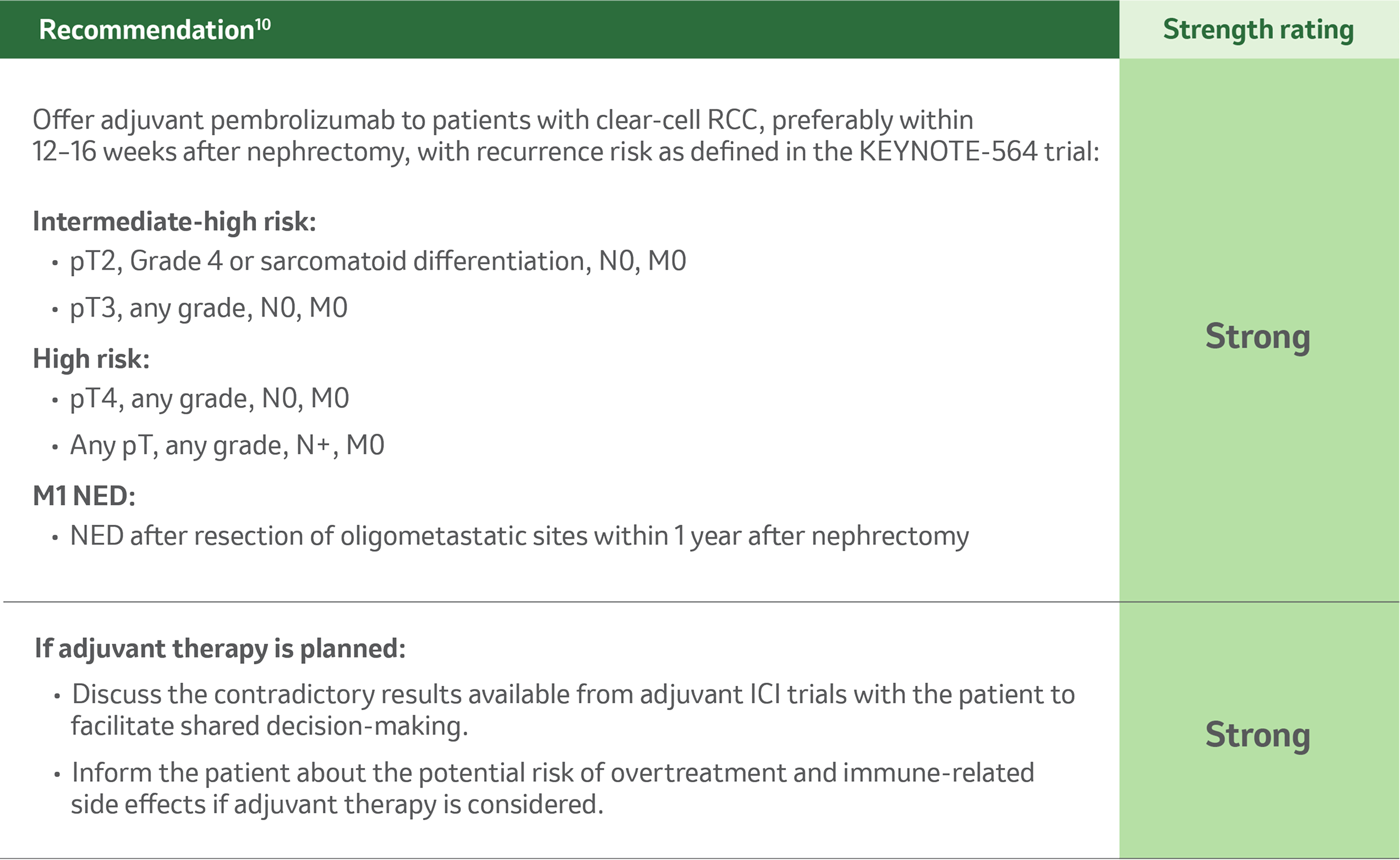
Adapted from Bedke J, et al. 2025.10
EAU: European Association of Urology; ESMO: European Society for Medical Oncology; ICI: immune checkpoint inhibitor; M0: no distant metastasis; M1: distant metastasis present; MCBS: Magnitude of Clinical Benefit Scale; N0: no regional lymph node metastasis; N1: involvement of regional lymph nodes; NED: no evidence of disease; RCC: renal cell carcinoma; T: primary tumour; T2: tumour >7 cm in greatest dimension, limited to the kidney; T3: tumour extends into major veins or peripheral tissues, but not into the ipsilateral adrenal gland and not beyond Gerota’s fascia; T4: tumour invades beyod Gerota’s fascia (including contiguous extension into the ipsilateral adrenal gland).
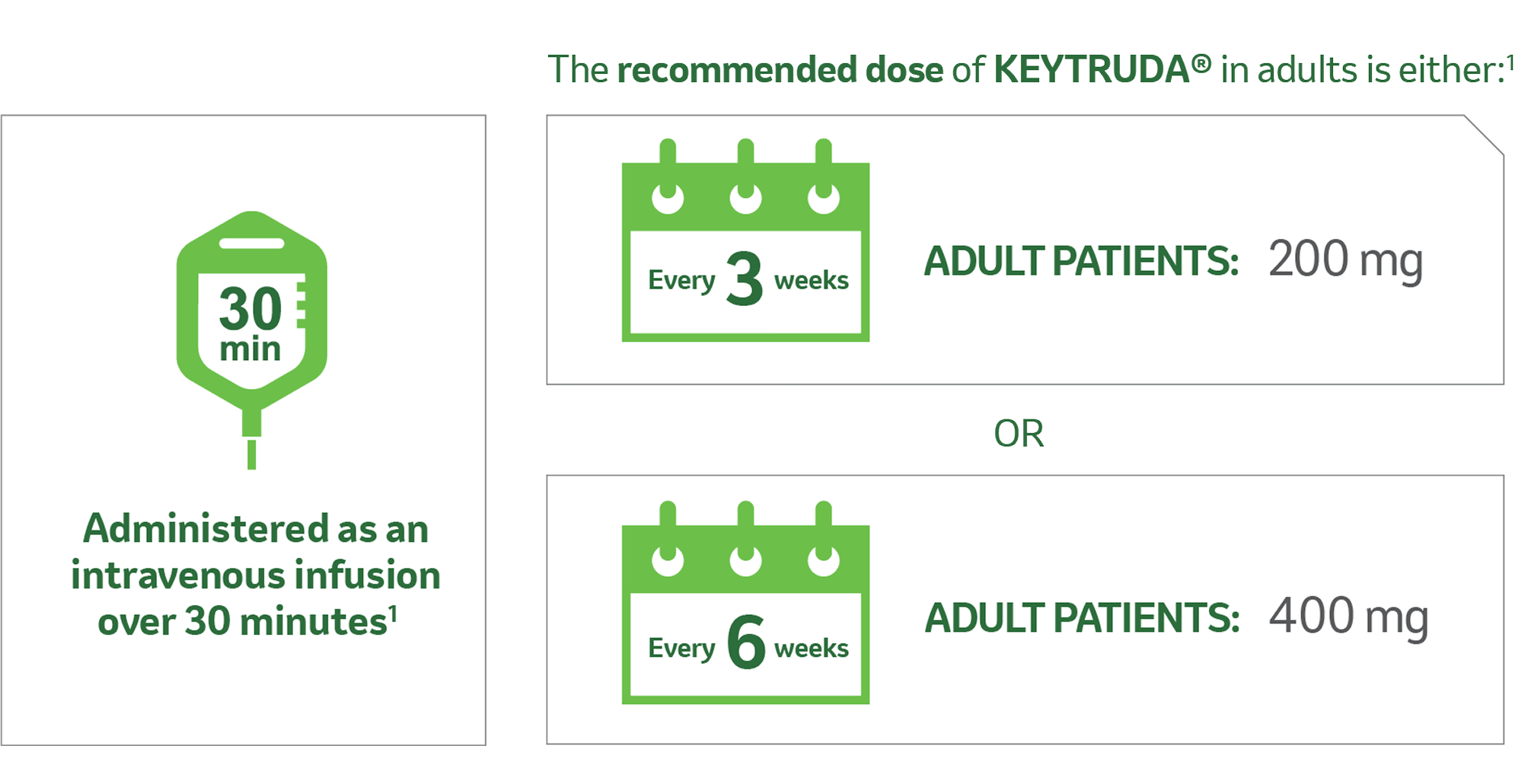
For your patients with RCC at intermediate-high or high risk of recurrence and M1 NED, adjuvant therapy with KEYTRUDA® should be administered for up to 1 year or until disease recurrence or unacceptable toxicity.1
For additional information about KEYTRUDA®, please see the Summary of Product Characteristics.
M1: distant metastasis present; NED: no evidence of disease; RCC: renal cell carcinoma.
Please consult the full prescribing information before prescribing or delivering the product.
KEYTRUDA® (Pembrolizumab) Selected Safety Information (SSI)
Indications:
Melanoma
KEYTRUDA as monotherapy is indicated for the treatment of adults and adolescents aged 12 years and older with advanced (unresectable or metastatic) melanoma.
KEYTRUDA as monotherapy is indicated for the adjuvant treatment of adults and adolescents aged 12 years and older with Stage IIB, IIC or III melanoma and who have undergone complete resection.
Non-small cell lung carcinoma (NSCLC)
KEYTRUDA as monotherapy is indicated for the first-line treatment of metastatic non-small cell lung carcinoma in adults whose tumour express PD-L1 with a ≥50% tumour proportion score (TPS) with no EGFR or ALK positive tumour mutations.
KEYTRUDA, in combination with pemetrexed and platinum chemotherapy, is indicated for the first-line treatment of metastatic non-squamous non-small cell lung carcinoma in adults whose tumours have no EGFR or ALK positive mutations.
KEYTRUDA, in combination with carboplatin and either paclitaxel or nab-paclitaxel, is indicated for the first-line treatment of metastatic squamous non-small cell lung carcinoma in adults.
KEYTRUDA as monotherapy is indicated for the treatment of locally advanced or metastatic non-small cell lung carcinoma in adults whose tumours express PD-L1 with a ≥1% TPS and who have received at least one prior chemotherapy regimen. Patients with EGFR or ALK positive tumour mutations should also have received targeted therapy before receiving KEYTRUDA.
KEYTRUDA is indicated for the treatment of patients with resectable (tumours ≥4 cm or node positive) NSCLC in combination with platinum containing chemotherapy as neoadjuvant treatment, and then continued as monotherapy as adjuvant treatment after surgery.
KEYTRUDA, as monotherapy is indicated as adjuvant treatment following resection and platinum-based chemotherapy for adult patients with Stage IB (T2a ≥4 cm), II, or IIIA NSCLC.
Classical Hodgkin lymphoma (cHL)
KEYTRUDA as monotherapy is indicated for the treatment of adult and paediatric patients aged 3 years and older with relapsed or refractory classical Hodgkin lymphoma who have failed autologous stem cell transplant (ASCT) or following at least two prior therapies when ASCT is not a treatment option.
Urothelial carcinoma
KEYTRUDA, in combination with enfortumab vedotin, is indicated for the treatment of adult patients with locally advanced or metastatic urothelial carcinoma.
KEYTRUDA as monotherapy is indicated for the treatment of locally advanced or metastatic urothelial carcinoma in adults who have received prior platinum containing chemotherapy.
KEYTRUDA is indicated for the treatment of patients with Bacillus Calmette-Guerin (BCG)-unresponsive, high-risk, non-muscle invasive bladder cancer (NMIBC) with carcinoma in situ (CIS) with or without papillary tumours who are ineligible for or have elected not to undergo cystectomy. This indication was approved based on complete response rate and duration of response. Continued approval of this indication depends on verification and description of benefit in confirmatory trials.
Head and neck squamous cell carcinoma (HNSCC)
KEYTRUDA, as monotherapy or in combination with platinum and 5 fluorouracil (5 FU) chemotherapy, is indicated for the first-line treatment of metastatic or unresectable recurrent head and neck squamous cell carcinoma in adults whose tumours express PD-L1 with a CPS ≥1.
KEYTRUDA as monotherapy is indicated for the treatment of recurrent or metastatic head and neck squamous cell carcinoma in adults whose tumours express PD-L1 with a ≥50% TPS and progressing on or after platinum containing chemotherapy.
Renal cell carcinoma (RCC)
KEYTRUDA, in combination with axitinib, is indicated for the first-line treatment of advanced renal cell carcinoma in adults.
KEYTRUDA, in combination with lenvatinib, is indicated for the first-line treatment of advanced renal cell carcinoma in adults (see section.)
KEYTRUDA as monotherapy is indicated for the adjuvant treatment of adults with renal cell carcinoma at increased risk of recurrence following nephrectomy or following nephrectomy and resection of metastatic lesions.
Microsatellite instability high (MSI-H) or mismatch repair deficient (dMMR) cancers
Colorectal cancer (CRC)
KEYTRUDA as monotherapy is indicated for adults with MSI-H or dMMR colorectal cancer in the following settings:
first-line treatment of metastatic colorectal cancer; treatment of unresectable or metastatic colorectal cancer after previous fluoropyrimidine based combination therapy.
Non-colorectal cancers
KEYTRUDA as monotherapy is indicated for the treatment of the following MSI-H or dMMR tumours in adults with:
advanced or recurrent endometrial carcinoma, who have disease progression on or following prior treatment with a platinum containing therapy in any setting and who are not candidates for curative surgery or radiation; unresectable or metastatic gastric, small intestine, or biliary cancer, who have disease progression on or following at least one prior therapy.
Endometrial Carcinoma
KEYTRUDA, in combination with carboplatin and paclitaxel, followed by KEYTRUDA as monotherapy, is indicated for the treatment of patients with primary advanced or recurrent endometrial carcinoma.
Gastric or gastro-oesophageal junction (GEJ) adenocarcinoma
KEYTRUDA, in combination with trastuzumab, fluoropyrimidine and platinum-containing chemotherapy, is indicated for the first-line treatment of locally advanced unresectable or metastatic HER2-positive gastric or gastro-oesophageal junction adenocarcinoma in adults whose tumours express PD-L1 with a CPS ≥1 as determined by a validated test.
KEYTRUDA, in combination with fluoropyrimidine and platinum-containing chemotherapy, is indicated for the first-line treatment of patients with locally advanced unresectable or metastatic gastric or gastro-oesophageal junction (GEJ) adenocarcinoma in adults whose tumours express PD-L1 with a CPS ≥1.
Oesophageal carcinoma
KEYTRUDA, in combination with platinum and fluoropyrimidine based chemotherapy, is indicated for the first-line treatment of locally advanced unresectable or metastatic carcinoma of the oesophageal or HER-2 negative gastro-oesophageal junction adenocarcinoma, in adults whose tumours express PD-L1 with a CPS ≥10.
Triple-negative breast cancer (TNBC)
KEYTRUDA, in combination with chemotherapy as neoadjuvant treatment, and then continued as monotherapy as adjuvant treatment after surgery, is indicated for the treatment of adults with locally advanced, or early-stage triple-negative breast cancer at high risk of recurrence.
KEYTRUDA, in combination with chemotherapy, is indicated for the treatment of locally recurrent unresectable or metastatic triple-negative breast cancer in adults whose tumours express PD-L1 with a CPS ≥10 and who have not received prior chemotherapy for metastatic disease.
Endometrial carcinoma (EC)
KEYTRUDA, in combination with lenvatinib, is indicated for the treatment of adult patients with advanced endometrial carcinoma that is mismatch repair proficient (pMMR) or not MSI-H, who have disease progression following prior systemic therapy in any setting and are not candidates for curative surgery or radiation.
Biliary Tract Carcinoma
KEYTRUDA, in combination with gemcitabine and cisplatin, is indicated for the treatment of patients with locally advanced unresectable or metastatic biliary tract carcinoma (BTC).
Cervical Cancer
KEYTRUDA, in combination with chemoradiotherapy (external beam radiation therapy followed by brachytherapy), is indicated for the treatment of FIGO 2014 Stage III – IVA locally advanced cervical cancer in adults who have not received prior definitive therapy.
KEYTRUDA, in combination with chemotherapy with or without bevacizumab, is indicated for the treatment of persistent, recurrent, or metastatic cervical cancer in adults whose tumours express PD-L1 with a CPS ≥1.
Dosage & Administration: KEYTRUDA is administered 30 minutes intravenous infusion. No dose reductions of KEYTRUDA are recommended. KEYTRUDA should be withheld or discontinued to manage adverse reactions.
Posology:
- The recommended dose of KEYTRUDA in adults is either 200 mg every 3 weeks or 400 mg every 6 weeks administered as an intravenous infusion over 30 minutes.
- The recommended dose of KEYTRUDA as monotherapy in paediatric patients aged 3 years and older with cHL or patients aged 12 years and older with melanoma is 2 mg/kg bodyweight (bw) (up to a maximum of 200 mg), every 3 weeks administered as an intravenous infusion over 30 minutes.
- For use in combination, see the Summary of Product Characteristics (SmPC) for the concomitant therapies.
- For urothelial carcinoma patients treated with KEYTRUDA in combination with enfortumab vedotin, administer KEYTRUDA after enfortumab vedotin when given on the same day.
- For urothelial carcinoma patients treated with KEYTRUDA in combination with enfortumab vedotin, the recommended initial dose of enfortumab vedotin is 1.25 mg/kg (up to a maximum of 125 mg for patients ≥100 kg) as an intravenous solution on Days 1 and 8 of a 21-day cycle until disease progression or unacceptable toxicity.
- Patients should be treated with KEYTRUDA until disease progression or unacceptable toxicity (and up to maximum duration of therapy if specified for an indication). Atypical responses (i.e. an initial transient increase in tumour size or small new lesions within the first few months followed by tumour shrinkage) have been observed. It is recommended to continue treatment for clinically stable patients with initial evidence of disease progression until disease progression is confirmed.
- For the adjuvant treatment of melanoma, NSCLC, or RCC, KEYTRUDA should be administered until disease recurrence, unacceptable toxicity, or for a duration of up to one year.
- For the neoadjuvant and adjuvant treatment of resectable NSCLC, patients should be treated with neoadjuvant KEYTRUDA in combination with chemotherapy for 12 weeks or until disease progression that precludes definitive surgery or unacceptable toxicity, followed by adjuvant treatment with KEYTRUDA as monotherapy for 39 weeks or until disease recurrence or unacceptable toxicity.
- For the neoadjuvant and adjuvant treatment of TNBC, patients should be treated with neoadjuvant KEYTRUDA in combination with chemotherapy for 8 doses of 200 mg every 3 weeks or 4 doses of 400 mg every 6 weeks or until disease progression that precludes definitive surgery or unacceptable toxicity, followed by adjuvant treatment with KEYTRUDA as monotherapy for 9 doses of 200 mg every 3 weeks or 5 doses of 400 mg every 6 weeks or until disease recurrence or unacceptable toxicity. Patients who experience disease progression that precludes definitive surgery or unacceptable toxicity related to KEYTRUDA as neoadjuvant treatment in combination with chemotherapy should not receive KEYTRUDA monotherapy as adjuvant treatment.
Contraindications: Hypersensitivity to the active substance or to any of the excipients.
Precautions/Warnings: In order to improve the traceability of biological medicinal products, the name and the batch number of the administered product should be clearly recorded. Women of childbearing potential should use effective contraception during treatment with pembrolizumab and for at least 4 months after the last dose of pembrolizumab. There are no data on the use of pembrolizumab in pregnant women. When assessing the PD-L1 status of the tumour, it is important that a well validated and robust methodology is chosen to minimise false negative or false positive determinations. KEYTRUDA can cause immune-mediated adverse reactions, including severe and fatal cases. Immune-mediated Pneumonitis, Immune-mediated Colitis, Immune-mediated Hepatitis, Immune-mediated Nephritis, Immune-mediated Endocrinopathies (as adrenal insufficiency, hypophysitis, type 1 diabetes mellitus, diabetic ketoacidosis, hypothyroidism, and hyperthyroidism) & Immune-mediated skin adverse reactions. KEYTRUDA can cause other immune-mediated adverse reactions as: uveitis, arthritis, myositis, myocarditis, pancreatitis, Guillain-Barré syndrome, myasthenic syndrome, haemolytic anaemia, sarcoidosis, encephalitis, myelitis, vasculitis, cholangitis sclerosing, gastritis, cystitis noninfective and hypoparathyroidism. KEYTRUDA can cause severe infusion-related reactions including hypersensitivity and anaphylaxis. Solid organ transplant rejection has been reported in the post-marketing setting in patients treated with PD-1 inhibitors. Cases of graft-versus-host-disease (GVHD) and hepatic veno-occlusive disease (VOD) have been observed in patients with cHL undergoing allogeneic HSCT after previous exposure to KEYTRUDA. In patients with a history of allogeneic HSCT, acute GVHD, including fatal GVHD, has been reported after treatment with KEYTRUDA. KEYTRUDA should not be used during pregnancy unless the clinical condition of the woman requires treatment with KEYTRUDA.
Most common adverse events:
Monotherapy: anemia, hypothyroidism, decreased appetite, headache, dyspnea, cough, diarrhea, abdominal pain, nausea, vomiting, constipation, pruritus, rash, musculoskeletal pain, arthralgia, fatigue, asthenia, oedema, pyrexia.
In combination with chemotherapy: neutropenia, anemia, thrombocytopenia, hypothyroidism, hypokalemia, decreased appetite, insomnia, neuropathy peripheral, headache, dyspnea, cough, nausea, diarrhea, vomiting, abdominal pain, constipation, alopecia, rash, pruritus, arthralgia, musculoskeletal pain, fatigue, asthenia, pyrexia, alanine aminotransferase increased, aspartate aminotransferase increased.
In combination with Axitinib or Lenvatinib: urinary tract infection, anemia, hypothyroidism, decreased appetite, headache, dysgeusia, hypertension, dyspnea, cough, diarrhea, abdominal pain, nausea, vomiting, constipation, rash, pruritus, arthralgia, musculoskeletal pain, myositis, pain in extremity, fatigue, asthenia, oedema, pyrexia, lipase increased, alanine aminotransferase increased, aspartate aminotransferase increased, blood creatinine increased.
Pembrolizumab in combination with enfortumab vedotin: When pembrolizumab is administered in combination with enfortumab vedotin, refer to the SmPC for enfortumab vedotin prior to initiation of treatment. The incidence of rash maculo papular was 36% all Grades (10% Grades 3-4), which is higher than observed in pembrolizumab monotherapy. Generally, adverse event frequencies were higher in patients ≥65 years of age compared to <65 years of age, particularly for serious adverse events (56.3% and 35.3%, respectively) and ≥Grade 3 events (80.3% and 64.2%, respectively), similar to observations with the chemotherapy comparator.
Please refer to the full Summary of Product Characteristics (SmPC) of KEYTRUDA® for more information.
References:
- KEYTRUDA®. Summary of product characteristics.
- Choueiri TK, Tomczak P, Park SH, et al. Adjuvant pembrolizumab after nephrectomy in renal-cell carcinoma. N Engl J Med. 2021;385(8):683-94.
- Choueiri TK, Tomczak P, Park SH, et al. Overall survival with adjuvant pembrolizumab in renal-cell carcinoma. N Engl J Med. 2024;390(15):1359-71.
- Sundaram M, Song Y, Rogerio JW, et al. Clinical and economic burdens of recurrence following nephrectomy for intermediate high- or high-risk renal cell carcinoma: a retrospective analysis of Surveillance, Epidemiology, and End Results-Medicare data. J Manag Care Spec Pharm. 2022;28(10):1149-60.
- Sundaram M, Song Y, Rogerio JW, et al. Supplementary Appendix to: Clinical and economic burdens of recurrence following nephrectomy for intermediate high- or high-risk renal cell carcinoma: a retrospective analysis of Surveillance, Epidemiology, and End Results-Medicare data. J Manag Care Spec Pharm. 2022;28(10):1149-60.
- Karam JA, Bhattacharya R, Ogbomo A, et al. Real-world study on the characteristics, post-nephrectomy journey, and outcomes of patients with early-stage renal cell carcinoma based on risk groups. Cancer Med. 2024;13(11):e7247.
- Choueiri TK, Tomczak P, Park SH, et al. Supplementary Appendix to: Adjuvant pembrolizumab after nephrectomy in renal-cell carcinoma. N Engl J Med. 2021;385(8):683-94.
- Haas NB, Powles T, Tomczak P, et al. Five-year follow-up results from the phase 3 KEYNOTE-564 study of adjuvant pembrolizumab for the treatment of clear cell renal cell carcinoma. Presented at: ASCO Annual Meeting, 30 May-03 June 2025; Chicago, IL, USA. Available at: https://meetings.asco.org/abstracts-presentations/243543/slides. Accessed 16-10-2025.
- Powles T, Albiges L, Bex A, et al. Renal cell carcinoma: ESMO Clinical Practice Guideline for diagnosis, treatment and follow-up. Ann Oncol. 2024;35(8):692-706.
- Bedke J, Ghanem YA, Albiges L, et al. Updated European Association of Urology Guidelines on the use of adjuvant immune checkpoint inhibitors and subsequent therapy for renal cell carcinoma. Eur Urol. 2025;87(4):491-6.
- Powles T, Albiges L, Bex A, et al. Supplementary Appendix to: Renal cell carcinoma: ESMO Clinical Practice Guideline for diagnosis, treatment and follow-up. Ann Oncol. 2024;35(8):692-706.
- Ljungberg B, Bensalah K, Canfield S, et al. EAU guidelines on renal cell carcinoma. EAU Guidelines Office; Arnhem, The Netherlands: 2024.
- European Association of Urology. Guidelines office development handbook. 2022. Available at: https://d56bochluxqnz.cloudfront.net/media/Guidelines_Office_Development_Handbook_website.pdf. Accessed 16-10-2025.
For Healthcare professionals only.
SA-JRC-00050 | 16/10/2026