Therapeutic Role of DPP-4 inhibitors in Type-2 Diabetes Management
Therapeutic Role of DPP-4 inhibitors in Type-2 Diabetes Management
International Diabetes Federation (IDF) reports that diabetes mellitus (DM) affects 73 million adults (2021) in the Middle East and North Africa (MENA) region a number expected to reach 136 million by 2045, with Kingdom of Saudi Arabia (KSA) ranking among the top ten countries for prevalence of DM and projected to be in the top five for Type 2 diabetes mellitus (T2DM) burden by 2030.1 It is well established that achieving optimal glycaemic control helps prevent or slow the progression of complications in T2DM.2 Dipeptidyl peptidase-4 (DPP-4) inhibitors, known for their glucose lowering effects have become integral in the therapeutic regimen for T2DM.3
Glycaemic control, maintaining blood glucose within a range that prevents both hyperglycaemia and hypoglycaemia is a key strategy in managing diabetes.4 Glycosylated haemoglobin (HbA1c) is the primary marker used to assess long-term glycaemic control and is a strong predictor of diabetes-related complications.4
Gaps to achieve glycaemic control in real-world practice
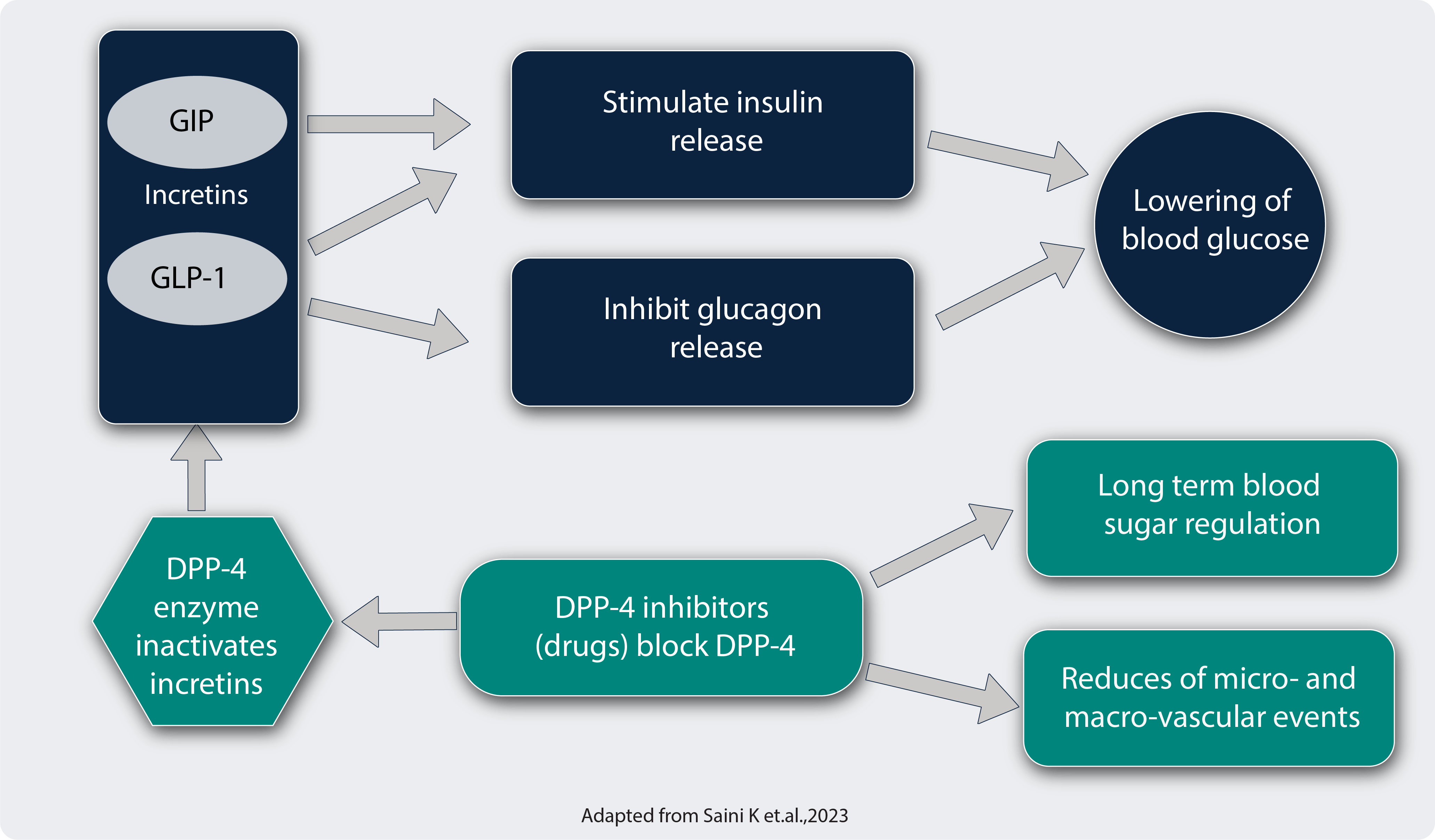
The rising use of incretin-based therapies reflects their value in T2DM management.8 The incretin effect, where oral glucose triggers a much stronger insulin response than intravenous glucose, is driven by the gut hormones glucagon-like peptide-1 (GLP-1) and glucagon-inhibitory peptide (GIP).8 Dipeptidyl peptidase-4 (DPP4- inhibitors) is an enzyme that rapidly degrades GLP-1 and GIP.8 DPP-4 inhibitors prevent this degradation.8
Mechanism of DPP-4 inhibitors- enhancing incretin pathways for glycaemic control
Sitagliptin is among the DPP-4 inhibitors which promote glucose-dependent insulin secretion and improve glucose control and is approved for use with other antihyperglycemic agents (AHAs) as well.
Addition of Sitagliptin improved glycemic response and HbA1c goal attainment
Study details:
Study methodology: The CompoSIT-M was a multinational, double-blind, randomized, placebo controlled clinical trial
conducted in 68 sites in 8 countries.⁹
Patient population: 458 participants were enrolled in the study.⁹
Inclusion criteria: Men and women, aged ≥18 years, with T2D, with a BMI ≥18 kg/m2, and either not on any AHA for ≥8
weeks (≥ 12 weeks if previously taking thiazolidinediones) with HbA1c ≥69 mmol/mol and ≤108 mmol/mol (≥8.5% and
≤12.0%), or on stable (≥8 weeks) monotherapy of (IR) or (XR) metformin (dose of 1000 mg/d), a SU, a glinide, or an AGI,
with an HbA1c ≥58 mmol/ mol and ≤97 mmol/mol (≥7.5% and
Exclusion criteria:
T1D patients, a history of KA, significant CVD, a history of malignancy, or use of any AHA other than as described above.⁹
Any history of intolerance or hypersensitivity to DPP-4 inhibitors or metformin, individuals taking metformin 1000 mg/d but
with evidence of intolerance to that dose or prior intolerance to a higher dose.⁹
Study treatment:
After the placebo run-in period, participants were randomized centrally, using an interactive voice response system, in a 1:1
ratio to sitagliptin or matching placebo.⁹
Study duration: From June 2016 to February
Primary endpoints: To compare (a) the reduction from baseline in HbA1c and (b) overall safety and
Secondary endpoints:
To compare (a) the % of participants at the HbA1c goal of <53 mmol/mol (<7.0%), (b) the reduction from baseline in FPG,
(c) the % of participants with baseline HbA1c ≥69 mmol/mol (≥8.5%) at the HbA1c goal of <53 mmol/mol (<7.0%), (d)
the % of participants who received glycaemic rescue therapy.⁹
Abbreviations: HbA1c: Glycated hemoglobin, mmol/mol: MMiilllliimmoolleess per mole, FFPDGG: FFaassttiinngg plasma glucose, SSAAEE: SSeerriioouuss
adverse events, T2D: Type 2 diabetes, BMI: Body mass index, kg/m2: Kilogram per meter square, AHA: Antihyperglycemic
agents, IR: Immediate release, XR: Extended release, mg/d: Milligrams per day, SU: Sulphonylurea, AGl:α-glucosidase
inhibitor, T1D: Type 1 diabetes, KA: Ketoacidosis, CVD: Cardiovascular disease, DPP-4: Dipeptidyl peptidase-4 inhibitors.
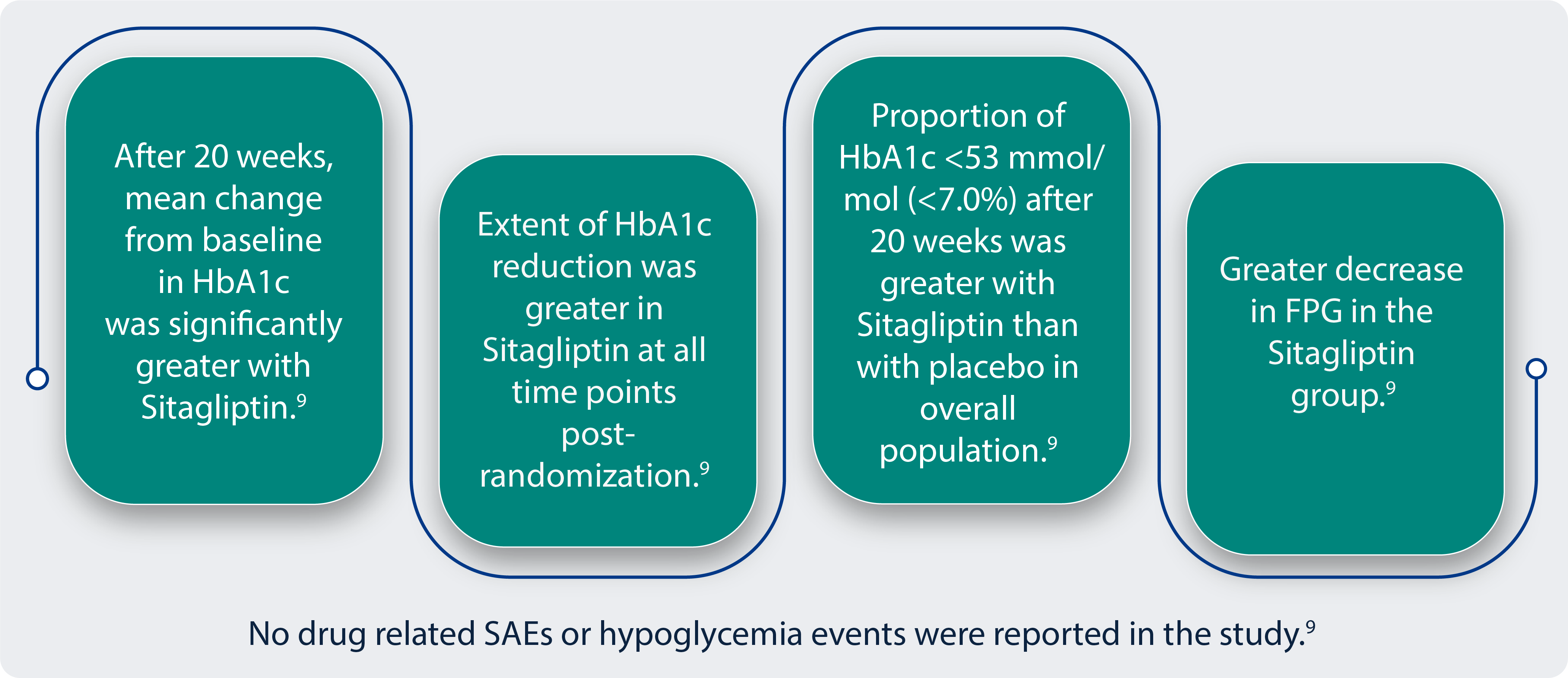
The primary and secondary efficacy hypotheses of glycemic superiority of Sitagliptin compared with placebo in this treatment intensification scenario were met, with no meaningful differences in the incidence of AEs or documented symptomatic hypoglycemia and without body weight gain.9
These results are consistent with the extensive body of data demonstrating
that Sitagliptin effectively and safely improves glycemic control when
used in combination with metformin.9
- AL-Rasheedi, M., Alhazmi, Y., AlDaiji, L. A., AlDaiji, L. A., Mobarki, F. I., Almuhaysini, K. M., Alshammari, J. S., Almistadi, N. A., Yoldash, S. A., Almaqwashi, N., Al Abdulgader, R. S., Mashyakhi, M. Y., Alamro, S., Walbi, I. A., & Haider, K. H. (2024). Status of diabetes mellitus in different regions of KSA and update on its management. Frontiers in Clinical Diabetes and Healthcare, 5, 1482090. https://doi.org/10.3389/fcdhc.2024.1482090
- Khunti, K., Zaccardi, F., Amod, A., Aroda, V. R., Aschner, P., Colagiuri, S., Mohan, V., & Chan, J. C. N. (2025). Glycaemic control is still central in the hierarchy of priorities in type 2 diabetes management. Diabetologia, 68(1), 17–28. https://doi.org/10.1007/s00125-024-06254-w
- Epelde, F. (2024). Transforming Diabetes Care: The Expanding Role of DPP-4 Inhibitors in Cardiovascular and Renal Protection. Medicina, 60(11), 1793. https://doi.org/10.3390/medicina60111793
- Alrasheedi, A. A. (2024). Glycaemic control among adults with type 2 diabetes mellitus in the Gulf Cooperation Council countries: An updated review. Endokrynologia Polska, VM/OJS/J/99519. https://doi.org/10.5603/ep.99519
- Louie, J. Z., Shiffman, D., Rowland, C. M., Kenyon, N. S., Bernal-Mizrachi, E., McPhaul, M. J., & Garg, R. (2024). Predictors of lack of glycemic control in persons with type 2 diabetes. Clinical Diabetes and Endocrinology, 10(1), 2. https://doi.org/10.1186/s40842-023-00160-7
- Lautsch, D., Boggs, R., Wang, T., Gonzalez, C., Milligan, G., Rajpathak, S., Malkani, S., McLeod, E., Carroll, J., & Higgins, V. (2022). Individualized HbA1c Goals, and Patient Awareness and Attainment of Goals in Type 2 Diabetes Mellitus: A Real-World Multinational Survey. Advances in Therapy, 39(2), 1016–1032. https://doi.org/10.1007/s12325-021-01985-3
- Hamalaw, S., Hama Salih, A., & Weli, S. (2024). Non-adherence to Anti-diabetic Prescriptions Among Type 2 Diabetes Mellitus Patients in the Kurdistan Region of Iraq. Cureus. https://doi.org/10.7759/cureus.60572
- Saini, K., Sharma, S., & Khan, Y. (2023). DPP-4 inhibitors for treating T2DM – hype or hope? An analysis based on the current literature. Frontiers in Molecular Biosciences, 10, 1130625. https://doi.org/10.3389/fmolb.2023.1130625.
- Frias, J. P., Zimmer, Z., Lam, R. L. H., Amorin, G., Ntabadde, C., Iredale, C., O’Neill, E. A., Engel, S. S., Kaufman, K. D., Makimura, H., & Crutchlow, M. F. (2019). Double-blind, randomized clinical trial assessing the efficacy and safety of early initiation of sitagliptin during metformin uptitration in the treatment of patients with type 2 diabetes: The CompoSIT-M study. Diabetes, Obesity and Metabolism, 21(5), 1128–1135. https://doi.org/10.1111/dom.13626