
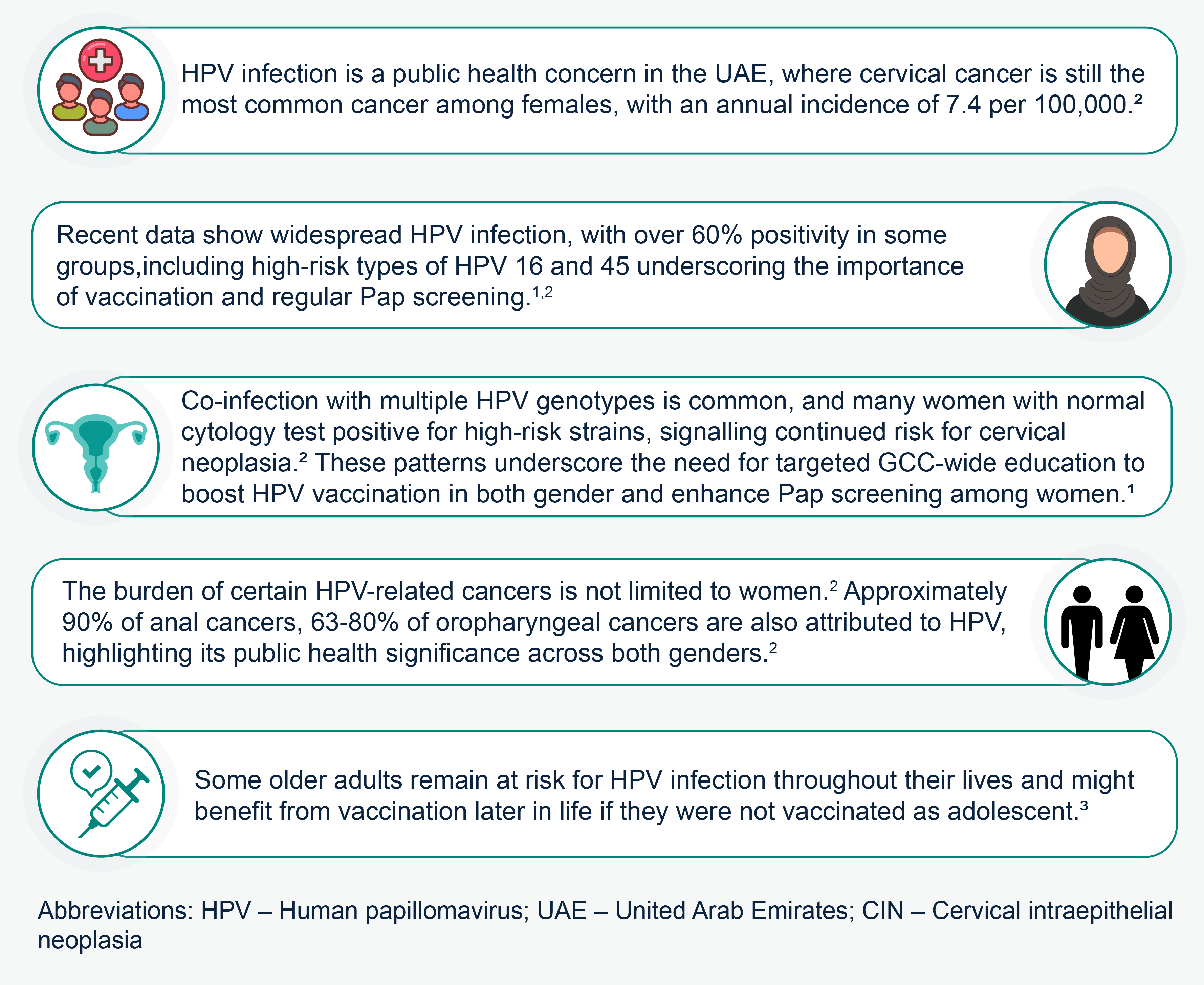
Human papillomavirus (HPV) infection is one of the most common sexually transmitted infections globally and contributes significantly to the burden of precancerous lesions and multiple cancers.1HPV vaccination and Pap testing are proven preventive strategies, yet the persistent prevalence of HPV infection in GCC countries underscores a major public health challenge and highlights the urgent need for targeted prevention and screening programs.1Evidence shows that vaccination reduces certain HPV-related malignancies in men and lowers infection rates in women through herd immunity.1Despite this, poor public awareness, vaccine hesitancy, cultural barriers, and limited access to organized cervical cancer screening programs hinder optimal uptake.2Strengthening national vaccination programs, improving education, and enhancing healthcare system support are critical to reducing certain HPV-related disease burden and improving long-term outcomes.2
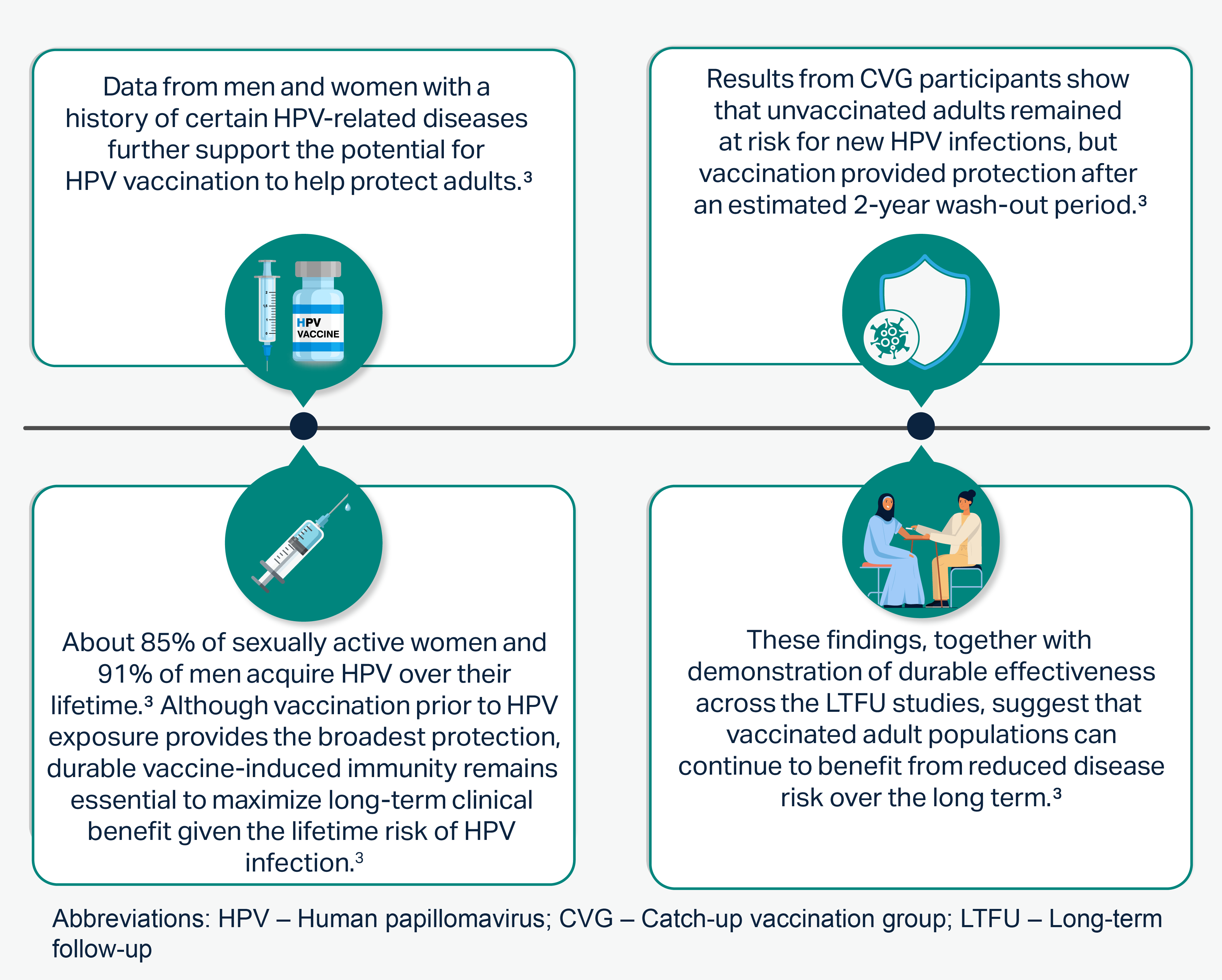
*Following is the long-term protective benefits of HPV vaccination in adults
- Study methodology
The long-term follow-up data from quadrivalent HPV vaccine clinical trials (studies 015, 018, 019, 020), evaluated durability of protection, catch-up vaccination outcomes, and long-term disease risk in adult populations.4 - Patient population
The qHPVvaccine LTFU studies enrolled diverse patient populations across age groups, genders, and geographies —including adult women (16–45 years), young men (16–26 years), adolescent boys and girls (9–15 years).4 - Inclusion criteria
Inclusion criteria: Individuals within defined age groups (9–45 years).4 - Study treatment
All the four LTFU studies involved a 3-dose regimen of the qHPVvaccine.4 - Study duration
Base studies: 3–4 years and LTFU up to 10–22 years.4 - Primary endpoint
The primary endpoints varied by study:
HPV 6/11/16/18-related CIN or condyloma.4HPV6/11/16/18-related EGL.4
HPV6/11/16/18-related AIN (among MSM).4
HPV16/18-related CIN2+.4
HPV6/11/16/18-related disease or persistent infection.4
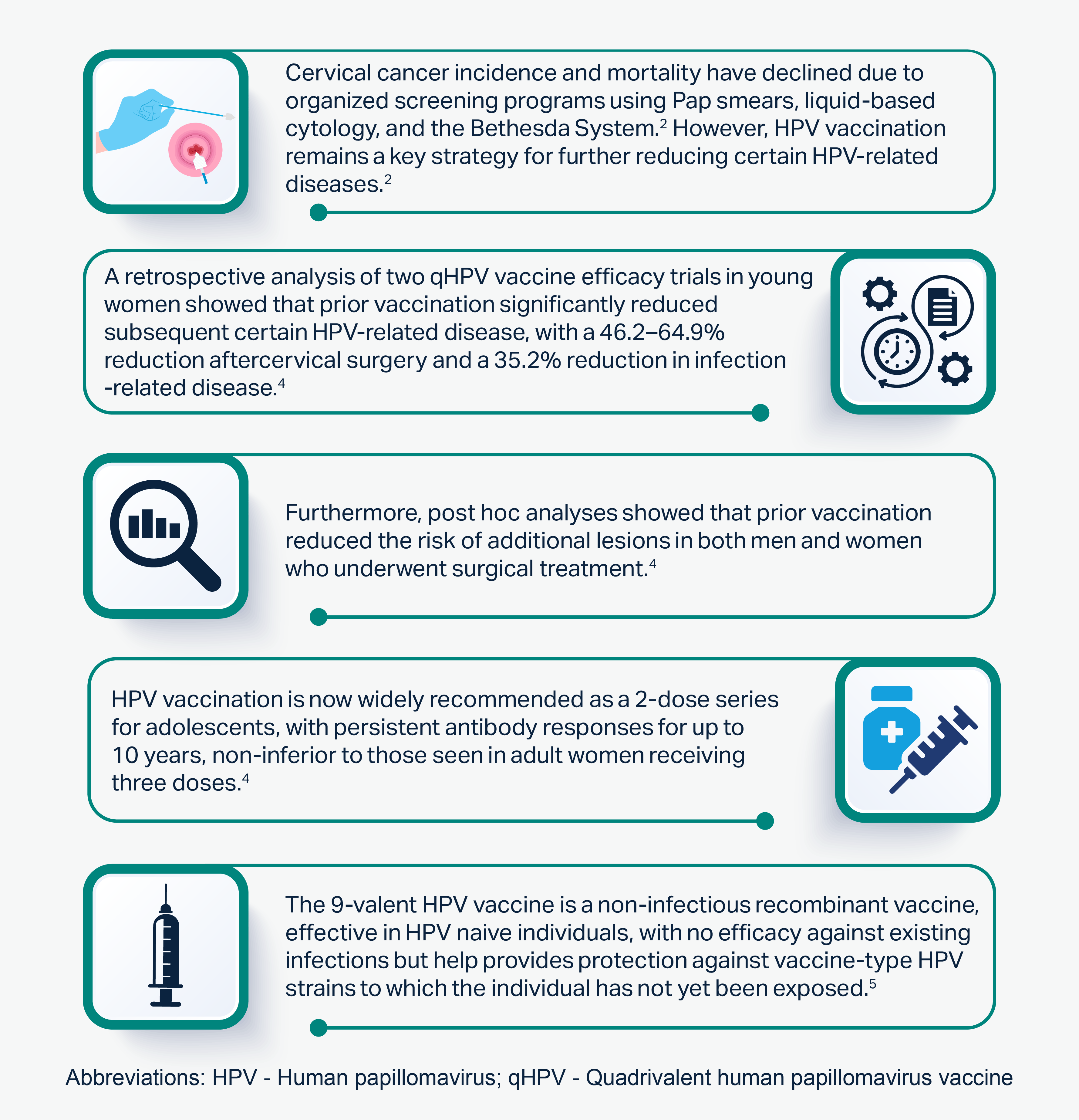
- Study methodology
The long-term follow-up data from quadrivalent HPV vaccine clinical trials (studies 015, 018, 019, 020), evaluated durability of protection, catch-up vaccination outcomes, and long-term disease risk in adult populations.4 - Patient population
The qHPVvaccine LTFU studies enrolled diverse patient populations across age groups, genders, and geographies —including adult women (16–45 years), young men (16–26 years), adolescent boys and girls (9–15 years).4 - Inclusion criteria
Inclusion criteria: Individuals within defined age groups (9–45 years).4 - Study treatment
All the four LTFU studies involved a 3-dose regimen of the qHPVvaccine.4 - Study duration
Base studies: 3–4 years and LTFU up to 10–22 years.4 - Primary endpoint
The primary endpoints varied by study:
HPV 6/11/16/18-related CIN or condyloma.4HPV6/11/16/18-related EGL.4
HPV6/11/16/18-related AIN (among MSM).4
HPV16/18-related CIN2+.4
HPV6/11/16/18-related disease or persistent infection.4
- Mahmoud, I., Al Eid, M. M. A., Mohamed, M. A., Aladwani, A. J., & El Amin, N. E. M. (2024). Human papillomavirus vaccination and Pap test uptake, awareness, and barriers among young adults in Gulf Cooperation Council countries: A comparative cross-sectional survey. Journal of Infection and Public Health, 17(10), 102525. https://doi.org/10.1016/j.jiph.2024.102525
- Zahid, S. I., Alnuaimi, B., Tamimi, K., Zahid, N. I., Al Saad, L., Zahid, M. I., et al. (2025, September 25). Human papillomavirus (HPV) vaccine utilization and its determinants among adolescents in the United Arab Emirates (UAE): A review. Cureus.https://www.cureus.com/articles/406068-human-papillomavirus-hpv-vaccine-utilization-and-its-determinants-among-adolescents-in-the-united-arab-emirates-uae-a-review
- Goldstone, S. E. (2023). Human papillomavirus (HPV) vaccines in adults: Learnings from long-term follow-up of quadrivalent HPV vaccine clinical trials. Human Vaccines & Immunotherapeutics, 19(1), 2184760. https://doi.org/10.1080/21645515.2023.2184760
- Centersfor Disease Control and Prevention. (n.d.). HPV vaccine –Vaccines of immunization. U.S. Department of Health & Human Services. https://www.cdc.gov/vaccines