Burden

Study Design:1
-
Objective
Derive updated estimates of rotavirus mortality for children <5 years of age for the period 2000– 2013 using updated estimates of diarrhea mortality, hospital based studies, and surveillance data on rotavirus disease burden, and incorporating the impact of rotavirus vaccine use in early adopting countries. -
Methods
A systematic review and epidemiological modeling analysis. The authors searched PubMed for rotavirus surveillance studies published between January 1998 and December 2014 and also included data from the WHO-coordinated rotavirus surveillance network from 2008–2013. A multiple linear regression model was constructed to estimate the proportion of diarrhea deaths attributable to rotavirus using factors such as study period midpoint, under-5 mortality rates, geographic region, and rotavirus vaccine introduction status. Country-specific rotavirus mortality estimates were then calculated by multiplying the estimated proportion of diarrhea deaths due to rotavirus by WHO-estimated diarrhea deaths for each country. -
Number of Patients
The analysis included specimens from 448,139 children younger than 5 years of age who were hospitalized with diarrhea and tested for rotavirus using enzyme immunoassay (EIA). These data came from 121 published articles across 74 countries and from 175 WHO-supported surveillance sites in 61 countries. -
Inclusion Criteria
Studies were included if they met all of the following criteria: the midpoint of data collection occurred in 1998 or later, the surveillance period covered at least 12 months, rotavirus infection was detected using enzyme immunoassay (EIA), at least 100 children younger than 5 years hospitalized with diarrhea were included, and patients were systematically enrolled through active surveillance. WHO surveillance network data meeting the same criteria were also included. -
Exclusion Criteria
Studies were excluded if they were not hospital-based, did not include children younger than 5 years of age, lacked a 12-month surveillance period, did not use proper rotavirus testing methods, included fewer than 100 specimens, were review articles, or contained duplicate data. -
Outcomes
The primary outcome of the study was the estimated number of rotavirus deaths among children younger than 5 years globally, regionally, and nationally from 2000–2013. Secondary outcomes included the proportion of diarrhea deaths attributable to rotavirus, regional trends in rotavirus mortality, and country-specific mortality rates per 100,000 children under 5 years of age.
Study Design3
-
Objective
Estimate the global burden of illness and deaths caused by rotavirus disease in children younger than 5 years of age by reviewing studies on diarrhea mortality and rotavirus infections published between 1986 and 2000. The study also aimed to generate preliminary country-specific mortality estimates to support health policy and vaccine decision-making. -
Methods
A literature review and epidemiological burden estimation analysis. The authors reviewed published studies on childhood diarrhea mortality and rotavirus infections from 1986–2000. Studies were identified through computer-based literature searches using keywords related to rotavirus, diarrhea, mortality, epidemiology, surveillance, and disease burden. The researchers estimated rotavirus illness in three clinical settings: cases requiring home care, outpatient clinic visits, and hospitalization. Mortality estimates were generated using World Bank income group classifications and country-specific diarrhea mortality data. -
Number of Patients
The study did not include a single defined patient population because it was a global review and modeling analysis based on multiple published studies. The estimates were derived from data involving children younger than 5 years of age from both developing and industrialized countries included in studies published between 1986 and 2000. -
Inclusion Criteria
Studies were included if they were published in English between 1986 and 2000, lasted for at least one year, included data on children younger than 5 years of age, and used enzyme immunoassay (EIA) or another reliable assay for rotavirus detection. Additional relevant studies were identified through reference lists and expert consultation. -
Outcomes
The primary outcomes were the estimated annual global numbers of rotavirus-related home-care episodes, outpatient visits, hospitalizations, and deaths among children younger than 5 years of age. The study estimated that rotavirus caused approximately 111 million episodes requiring home care, 25 million clinic visits, 2 million hospitalizations, and 352,000–592,000 deaths annually worldwide.
Study Design:4,5
-
Objective
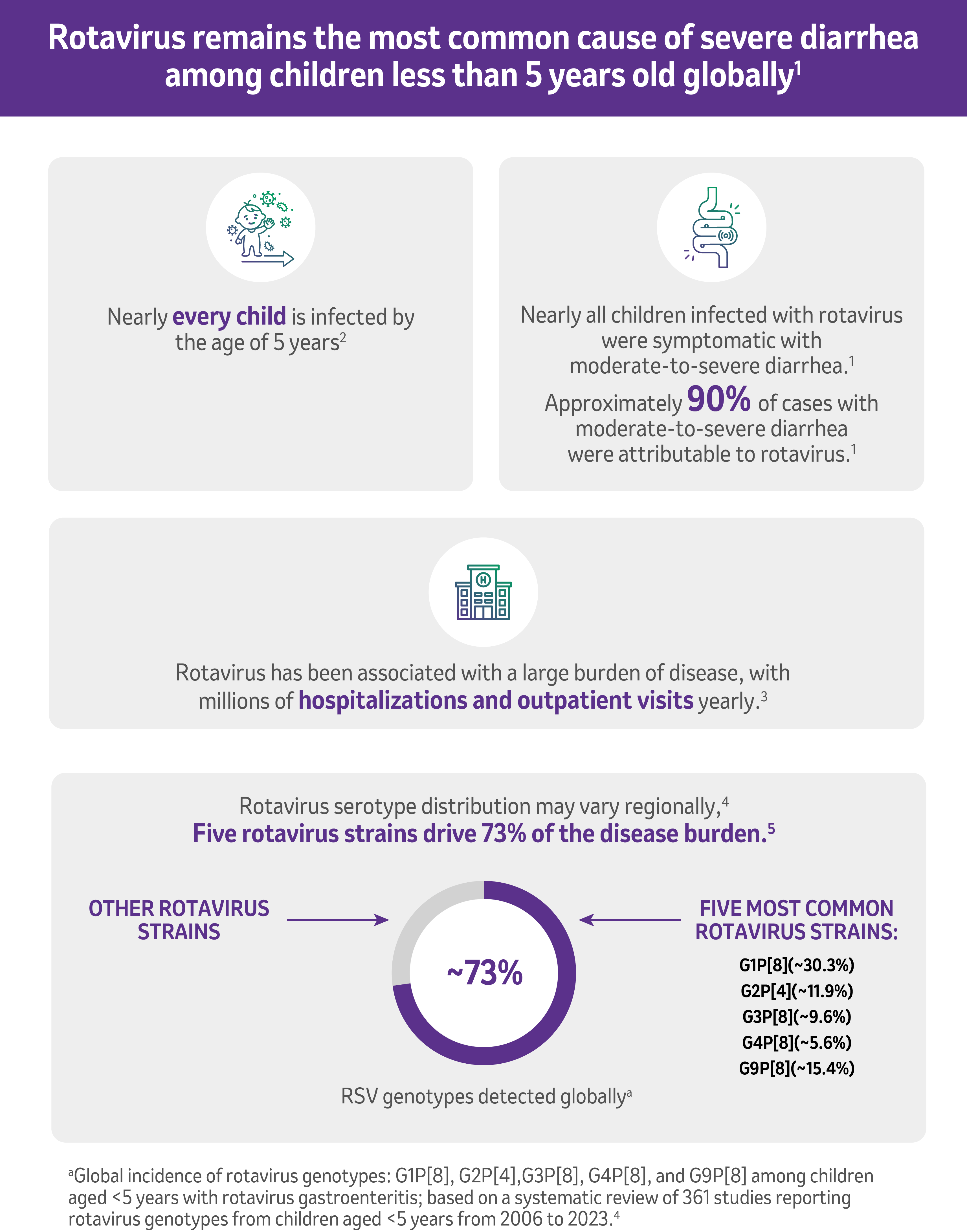
Compares global and regional genotype distributions between vaccine-introducing and non introducing countries and evaluates how these comparisons changed after consideration of temporal trends. -
Methods
This systematic review was guided by the Preferred Reporting Items for Systematic Reviews and Meta-Analysis (PRISMA) guidelines. Embase, Medline, CAB Abstracts, and Global Health databases were searched for studies reporting rotavirus genotypes among children aged <5 years with rotavirus gastroenteritis. Article screening and full-text review were conducted independently by reviewers using Covidence. Genotype data were extracted for each country-specific study period, and vaccine introduction status was determined based on the date of rotavirus vaccine introduction into the national immunization program. Genotype counts were pooled to estimate genotype proportions, and mixed-effect logistic regression models were used to compare genotype detection odds according to vaccine introduction status and time since vaccine introduction. -
Number of Patients
The analysis included 24 821 genotyped stool specimens from vaccine-introducing settings and 123 255 specimens from non introducing settings across 361 studies. -
Inclusion Criteria
Studies reporting rotavirus genotypes among children <5 years with rotavirus gastroenteritis and sufficient genotype data collected after 2000 were included. -
Exclusion Criteria
Clinical trials, duplicate data, studies with insufficient genotype data, asymptomatic children, hospital-acquired infections, and studies with samples collected before 2000 were excluded. -
Outcomes
The study assessed rotavirus genotype distributions, temporal genotype trends, and genotype detection odds according to vaccine introduction status and time since vaccine introduction.
Study Design:6
-
Objective
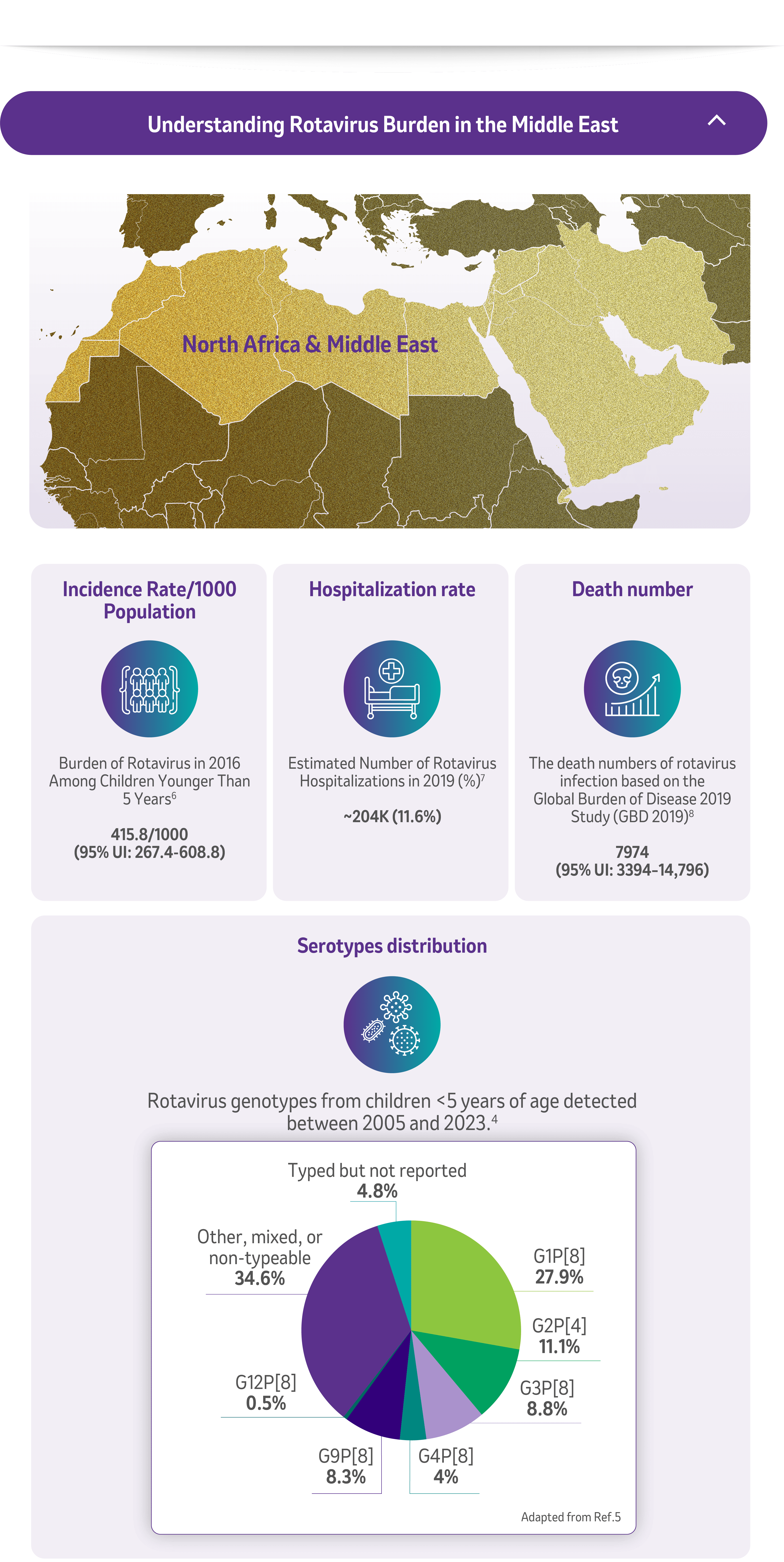
Describes the incidence and mortality of rotavirus infection among children younger than 5 years and reveals the urgent need for interventions to reduce diarrhea risk, treat severe diarrhea episodes, and prevent rotavirus diarrhea. -
Methods
A cross-sectional modeling analysis based on findings from the Global Burden of Disease Study 2016 (GBD 2016). The researchers used Bayesian hierarchical models, including the Cause of Death Ensemble model (CODEm) and DisMod-MR version 2.1, to estimate rotavirus-associated mortality and morbidity across countries, age groups, sexes, and years. Data sources included scientific literature, surveillance systems, vital registration data, verbal autopsy data, population surveys, and healthcare records. Rotavirus-attributable burden was estimated using population attributable fractions (PAFs), while vaccine impact was assessed using modeled vaccine coverage and vaccine efficacy estimates. -
Number of Patients
The study did not include a single patient cohort because it was a global burden estimation analysis using aggregated international datasets and surveillance systems. The analysis focused on children younger than 5 years worldwide and estimated that rotavirus caused more than 258 million diarrhea episodes and 128,500 deaths globally in 2016. -
Inclusion Criteria
The study included global data sources used in the Global Burden of Disease Study 2016, including surveillance data, scientific literature, healthcare records, verbal autopsy data, and population-based studies related to diarrhea and rotavirus infection among children younger than 5 years of age. -
Outcomes
The primary outcomes were rotavirus-associated mortality and morbidity among children younger than 5 years by country and year, as well as the number of deaths prevented by rotavirus vaccination. Rotavirus vaccination was estimated to have prevented approximately 28,800 deaths worldwide in the same year.
Study Design:7
-
Objective
Estimate the global number of rotavirus hospitalizations among children younger than 5 years in 2019, determine how many hospitalizations were prevented by current rotavirus vaccination programs, and estimate the additional number of hospitalizations that could be prevented through universal vaccine introduction and improved vaccine coverage worldwide. -
Methods
A systematic review and global burden estimation analysis. The authors systematically reviewed PubMed articles published between January 1, 2000, and December 31, 2019, following PRISMA guidelines. Studies reporting annual rotavirus hospitalization rates in children younger than 5 years before vaccine introduction were included. Data were grouped according to childhood mortality strata and WHO regions. Median hospitalization rates were calculated and applied to country-specific population estimates to estimate global hospitalization burden. Vaccine coverage data from WHO/UNICEF and vaccine effectiveness estimates were then used to estimate hospitalizations prevented by vaccination and the potential additional reductions achievable with universal vaccine introduction and higher coverage. -
Number of Patients
The study did not involve a single patient cohort because it was a systematic review and modeling study using aggregated population-based surveillance data from multiple countries. The analysis estimated that approximately 1,760,113 rotavirus hospitalizations occurred globally among children younger than 5 years in 2019. -
Inclusion Criteria
The study included primary peer-reviewed studies that: Reported annual rotavirus hospitalization rates among children younger than 5 years before rotavirus vaccine introduction, Included at least one continuous year of surveillance data, Collected hospitalization data after the year 2000, used active surveillance methods to identify laboratory-confirmed rotavirus hospitalizations. -
Exclusion Criteria
Studies including nosocomial infections, focused on special populations such as military-base populations, involving nonhuman rotavirus, using hospital discharge coding alone to calculate hospitalization rates, conducted in non-WHO member countries, with passive surveillance methods or without hospitalization rate data. -
Outcomes
The primary outcomes were the estimated number of global rotavirus hospitalizations among children younger than 5 years in 2019, the number of hospitalizations prevented by current rotavirus vaccination programs, the number of additional hospitalizations potentially preventable through universal vaccine introduction and improved vaccine coverage.
Study Design:8
-
Objective
Explore the global burden and 30-year change patterns of rotavirus infection-associated deaths. -
Methods
Based on the Global Burden of Disease 2019 Study (GBD 2019), the study analyzed the age-standardized death rate (ASDR) of rotavirus infection by sex, geographical region, and sociodemographic index (SDI) from 1990 to 2019. A Joinpoint regression model was used to analyze global trends in rotavirus infection over the 30 years, SaTScan software was used to detect spatial and temporal aggregations, and a generalized linear model was used to explore the relationship between sociodemographic factors and death rates of rotavirus infection. -
Number of Patients
GBD 2019 included 204 countries and territories divided into 21 regions based on epidemiological similarities and geographical proximity and five groups according to SDI quintiles (low, low-middle,middle, high-middle, and high SDI). -
Inclusion Criteria
The study included data from GBD 2019, which provided comprehensive and standardized assessments of the world’s health for 369 diseases, injuries, and impairments from 1990 to 2019. The study extracted the number of deaths, death rates, and ASDRs of rotavirus infection with 95% UIs from 1990 to 2019, and analyses were stratified by age, sex, location, and year. -
Outcomes
The study assessed the age-standardized death rates (ASDRs), number of deaths, and temporal trends of rotavirus infection-associated deaths from 1990 to 2019 according to sex, age group, geographical region, and sociodemographic index (SDI).
-
Objective
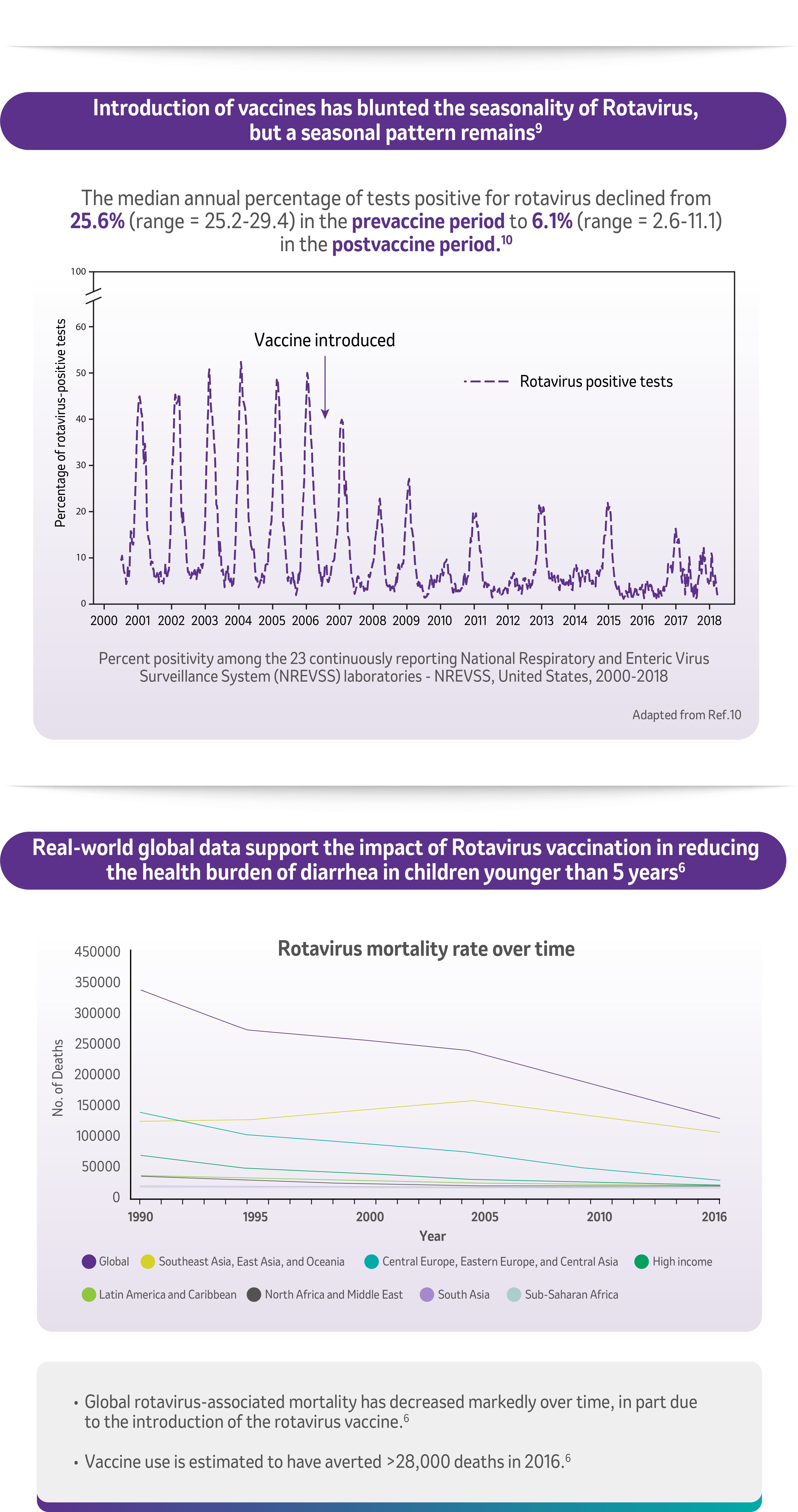
Describes the incidence and mortality of rotavirus infection among children younger than 5 years and reveals the urgent need for interventions to reduce diarrhea risk, treat severe diarrhea episodes, and prevent rotavirus diarrhea. -
Methods
A cross-sectional modeling analysis based on findings from the Global Burden of Disease Study 2016 (GBD 2016). The researchers used Bayesian hierarchical models, including the Cause of Death Ensemble model (CODEm) and DisMod-MR version 2.1, to estimate rotavirus-associated mortality and morbidity across countries, age groups, sexes, and years. Data sources included scientific literature, surveillance systems, vital registration data, verbal autopsy data, population surveys, and healthcare records. Rotavirus-attributable burden was estimated using population attributable fractions (PAFs), while vaccine impact was assessed using modeled vaccine coverage and vaccine efficacy estimates. -
Number of Patients
The study did not include a single patient cohort because it was a global burden estimation analysis using aggregated international datasets and surveillance systems. The analysis focused on children younger than 5 years worldwide and estimated that rotavirus caused more than 258 million diarrhea episodes and 128,500 deaths globally in 2016. -
Inclusion Criteria
The study included global data sources used in the Global Burden of Disease Study 2016, including surveillance data, scientific literature, healthcare records, verbal autopsy data, and population-based studies related to diarrhea and rotavirus infection among children younger than 5 years of age. -
Outcomes
The primary outcomes were rotavirus-associated mortality and morbidity among children younger than 5 years by country and year, as well as the number of deaths prevented by rotavirus vaccination. Rotavirus vaccination was estimated to have prevented approximately 28,800 deaths worldwide in the same year.
References :
-
Tate JE, Burton AH, Boschi-Pinto C, et al. Global, regional, and national estimates of rotavirus mortality in children <5 years of age, 2000–2013. Clinical
Infectious Diseases. 2016;62(Suppl 2):S96–S105. - Tate JE, Patel MM, Steele AD, et al. Global impact of rotavirus vaccines. Expert Review of Vaccines. 2010;9(4):395–407.
-
Parashar UD, Hummelman EG, Bresee JS, et al. Global illness and deaths caused by rotavirus disease in children. Emerging Infectious Diseases.
2003;9(5):565–572. -
Amin AB, et al. a systematic review and meta-analysis of global, regional, and temporal trends by rotavirus vaccine introduction. The Journal of Infectious
Diseases. 2024 May 15;229(5):1460-9. -
Amin AB, et al. Rotavirus genotypes in the postvaccine era: a systematic review and meta-analysis of global, regional, and temporal trends by rotavirus vaccine
introduction. Journal of Infectious Diseases. 2024;Suppl:1–54. -
Troeger C, Khalil IA, Rao PC, Cao S, Blacker BF, Ahmed T, et al. Rotavirus vaccination and the global burden of rotavirus diarrhea among children younger than 5
years. JAMA pediatrics. 2018 Oct;172(10):958-65. -
Benjamin D. Hallowell, Parashar UD, Tate JE. Global estimates of rotavirus hospitalizations among children below 5 years in 2019 and current and projected
impacts of rotavirus vaccination. Journal of Infectious Diseases. 2022;225(7):1021–1031. -
Yuxia Du, et al. Global burden and trends of rotavirus infection-associated deaths from 1990 to 2019: an observational trend study. BMC Infectious Diseases.
2022;22:1–10 -
Aliabadi N, Tate JE, Haynes AK, et al. Sustained decrease in laboratory detection of rotavirus after implementation of routine vaccination — United States,
2000–2014. MMWR Morbidity and Mortality Weekly Report. 2015;64(13):337–342. -
Benjamin D. Hallowell, Tate JE, Jiang B, et al. Trends in the laboratory detection of rotavirus before and after implementation of routine rotavirus vaccination —
United States, 2000–2018. MMWR Morbidity and Mortality Weekly Report. 2019;68(23):539–543.