Why Rotateq™ ?


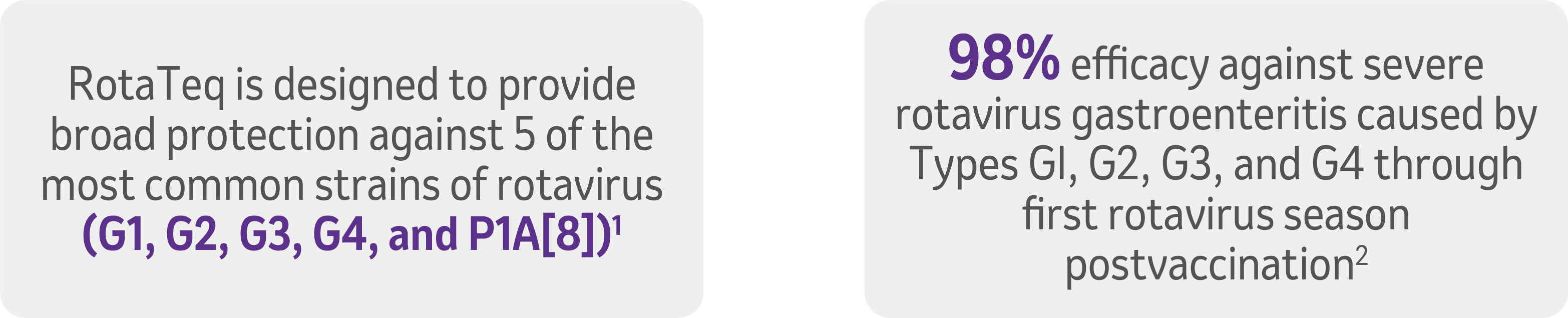
Study Design:2
-
Objective
The study evaluated the safety of the vaccine with regard to intussusception and other adverse events and its efficacy in preventing rotavirus gastroenteritis and the associated use of health care resources. -
Methods
A double-blind (with sponsor blinding), placebo-controlled, randomized trial conducted from 2001 to 2004 in 11 countries. Healthy infants between 6 and 12 weeks of age were randomly assigned in a 1:1 ratio to receive three oral doses of pentavalent rotavirus vaccine or placebo 4 to 10 weeks apart. Active surveillance was used to monitor intussusception, serious adverse events, hospitalizations, emergency department visits, and episodes of rotavirus gastroenteritis. A clinical-efficacy substudy and detailed safety substudy were also conducted. -
Number of Patients
A total of 70,301 subjects were enrolled, and 68,038 subjects received at least one dose of vaccine or placebo. -
Inclusion Criteria
Healthy infants between 6 and 12 weeks of age were eligible for enrollment. -
Exclusion Criteria
Infants were excluded if oral poliovirus vaccine had been administered during the 42-day period before the planned first dose or if oral poliovirus vaccination was anticipated during the study period. -
Outcomes
The study assessed intussusception, serious adverse events, hospitalizations, emergency department visits, rotavirus gastroenteritis of any severity, severe rotavirus gastroenteritis, clinic visits, immunogenicity, and use of health care resources associated with rotavirus gastroenteritis.

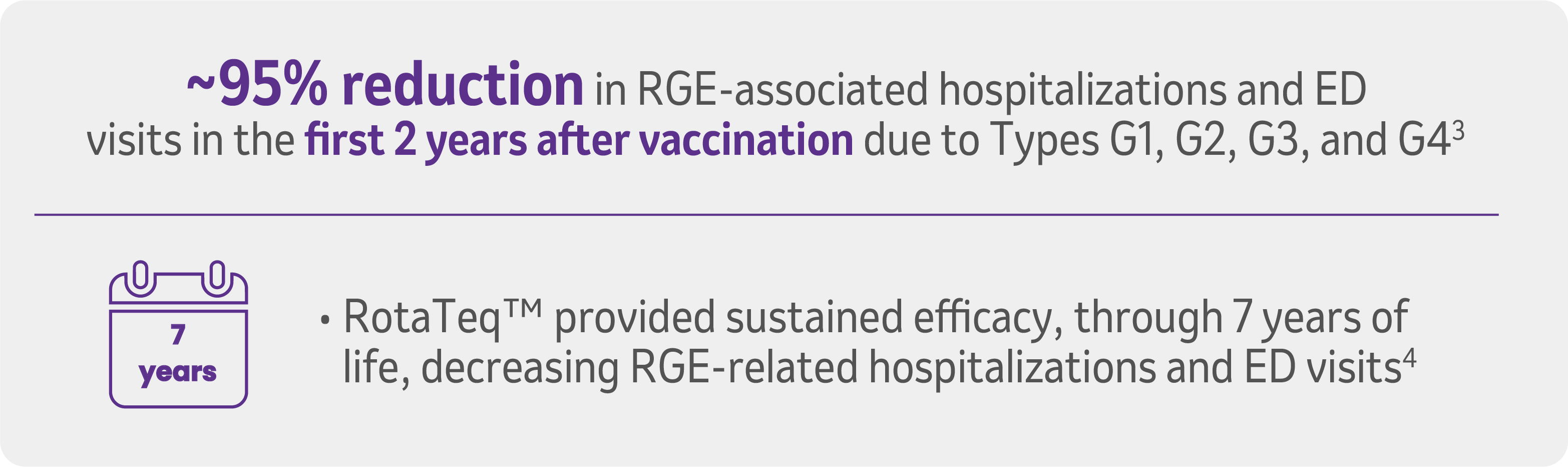
Study Design:3
-
Objective
The study evaluated the consistency of the healthcare utilization results based on the modified intention to treat (MITT) analyses with the PP analyses and explored the consistency of the results for different subgroups of the study population with different types of surveillance. -
Methods
A placebo-controlled Phase III study conducted within the Rotavirus Efficacy and Safety Trial (REST). Infants were randomly assigned in a 1:1 ratio to receive either RV5 vaccine or placebo starting at 6–12 weeks of age, followed by two additional doses at 4–10 week intervals up to 32 weeks of age. Data on
healthcare utilization for acute gastroenteritis were collected through telephone interviews with parents after administration of the first dose. Parents were contacted every 2 weeks or every 6 weeks depending on substudy enrollment, and Poisson regression was used to evaluate the effect of RV5 on healthcare encounter rates. -
Number of Patients
A total of 69,274 randomized infants were included in the REST clinical database, and 68,038 infants received at least one dose of vaccine or placebo. -
Inclusion Criteria
Healthy infants aged 6–12 weeks were eligible to receive three doses of vaccine or placebo. -
Exclusion Criteria
The MITT analysis excluded infants who were randomized but never vaccinated, infants without follow-up after the first vaccination, and infants classified as not evaluable because of incomplete clinical or laboratory results or stool specimens collected outside the allowed time period. -
Outcomes
The study assessed rotavirus gastroenteritis-associated hospitalizations, emergency department visits, office visits, acute gastroenteritis episodes, healthcare utilization rates, vaccine efficacy against different rotavirus serotypes, and the effect of surveillance intensity on reported healthcare encounters.


References :
- Rotateq[Summary of Product Characteristics].United Arab Emirates. March 2026
- Vesikari T, Matson DO, Dennehy P, Van Damme P, Santosham M, Rodriguez Z, et al. safety and efficacy of a pentavalent human–bovine (WC3) reassortant rotavirus vaccine. New England Journal of Medicine. 2006 Jan 5;354(1):23-33.
- Itzler R, Koch G, Matson DO, Gothefors L, Van Damme P, Dinubile MJ, Heaton PM. Robustness of the healthcare utilization results from the Rotavirus Efficacy and Safety Trial (REST) evaluating the human-bovine (WC3) reassortant pentavalent rotavirus vaccine (RV5).BMC Pediatr. 2010 Jun 11;10:42.
- Payne DC, Selvarangan R, Azimi PH, et al. Long-term consistency in rotavirus vaccine protection:RV5 and RV1 vaccine effectiveness in US children, 2012-2013. Clin Infect Dis. 2015;61(12):1792–1799
- Goveia MG, Rodriguez ZM, Dallas MJ, Itzler RF, Boslego JW, Heaton PM, DiNubile MJ; REST Study Team. Safety and efficacy of the pentavalent human-bovine (WC3) reassortant rotavirus vaccine in healthy premature infants. Pediatr Infect Dis J. 2007 Dec; 26 (12): 1099-104
- Data on file, MSD