Risk of Adult IPD
ADULT IPD IS A SERIOUS RISK3
Although progress has been made to impact the incidence of IPD, it continues to cause morbidity and mortality in Europe and globally.4,5
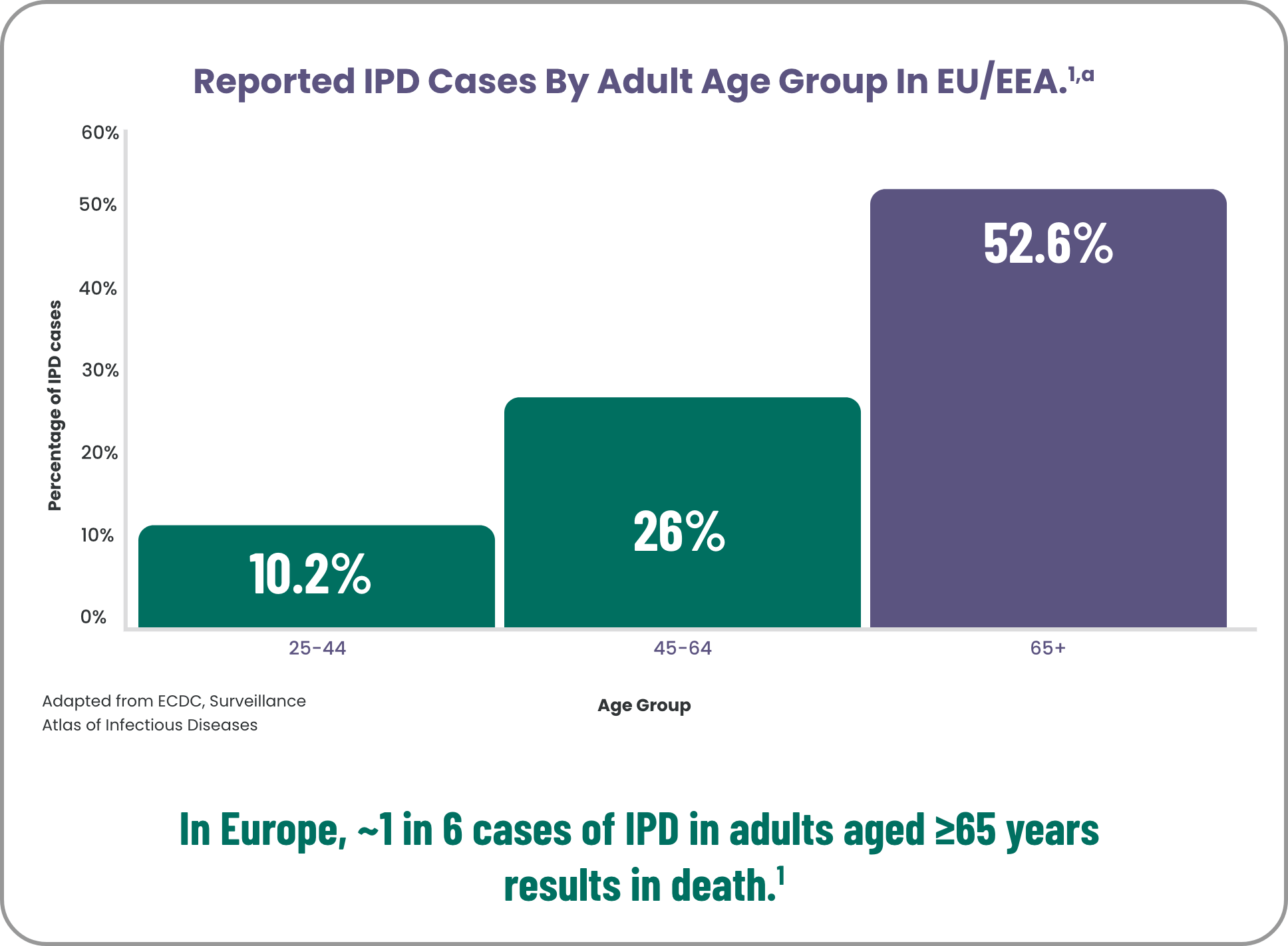
IPD, invasive pneumococcal disease.
a Based on European Centre for Disease Prevention and Control data for adults in Europe 2023 and may not reflect local pneumococcal disease epidemiology in the UAE. Regional variations may exist.1
b The same bacteria that cause pneumococcal pneumonia, Streptococcus pneumoniae, might invade normally sterile sites in the body, such as the blood or cerebrospinal fluid causing IPD. IPD is a serious illness that can lead to hospitalization, complications including bacteremia and meningitis, and sometimes death.
c Based on CDC data for IPD incidence in 2019.
d Based on CDC data for IPD incidence in 2022.
These data may not reflect local pneumococcal disease epidemiology in the UAE. Regional variations may exist.
Study Design
- This is an analysis study that present PCV serotype coverage of older adults (primarily 65 years and older) from high income countries using the latest data available at time.3
- Countries were selected based on classification as high-income by the World Bank.3
- Data were obtained from multiple sources, including: Peer-reviewed publications (via targeted PubMed search), national surveillance reports, on-line databases (e.g., ECDC), direct communication with in-country investigators affiliated with surveillance systems or hospitals.3
- A total of 33 high-income countries met the inclusion criteria.3
- IPD cases in older adults were reported for individuals aged ≥65 years, with the exception of Chile, Germany, and Uruguay (≥60 years), and Singapore (≥50 years). Twenty-seven countries had data available for at least three years (with 54.5% providing data for 2016–2018), while four countries had data for two years, and two countries had data for one year.3
- In total, 52,905 IPD cases in older adults had an identified serotype.3
Included Countries
- Eligible countries had to report IPD cases in older adults through one of the following: a national, regional, or sentinel surveillance system, or a hospital network.3
- For countries that had introduced a pediatric PCV into the national immunization program (NIP), inclusion required reporting of IPD cases after vaccine introduction.3
- Countries without a pediatric PCV in the NIP were also eligible for inclusion.3
- A minimum threshold of more than 20 IPD cases reported during the inclusion period was required for a country to be included.3
Data Selection
- Inclusion criteria for data used in this analysis: for countries with more than one data source reporting IPD cases, the source with the largest number of cases was selected; and cases from the three most recent years of data available were selected (if three years were not available, all available data were selected).3
- Exclusion criteria for data used in this analysis: the anatomical source of pneumococcal isolates was not specified; non-sterile/sterile site isolates were not differentiated; and IPD cases were not stratified by age or serotype.3
Data Collection and Analysis
- IPD case counts for each serotype in older adults were extracted from data covering up to the three most recent years available.3
- Average percentages of IPD attributed to individual serotypes and pneumococcal conjugate vaccine (PCV) formulations were computed.3
- These averages were stratified by World Health Organization (WHO) region and by the duration of pediatric PCV implementation in the national immunization program (NIP).3
- For each country, the proportion of serotyped IPD cases attributable to vaccine-covered serotypes was calculated.3
- Cases with missing serotype information or identified as non-typeable (NT) were excluded from the denominator in these calculations.3
References
- European Centre for Disease Prevention and Control. Surveillance Atlas of Infectious Diseases. Invasive pneumococcal disease. Accessed 26 September 2025. https://atlas.ecdc.europa.eu/public/index.aspx.
- Centers for Disease Control and Prevention. (2024). ABCs bact facts interactive data dashboard: SPN serotypes 1998–2023. Accessed 26 September 2025. https://www.cdc.gov/abcs/bact-facts/data-dashboard.html.
- Grant, L. R., Slack, M. P. E., Theilacker, C., et al. (2023). Distribution of serotypes causing invasive pneumococcal disease in older adults from high-income countries and impact of pediatric and adult vaccination policies. Vaccine, 41(38), 5662–5669.
- European Centre for Disease Prevention and Control. (2025). Invasive pneumococcal disease. Annual Epidemiological Report for 2022.
- European Centre for Disease Prevention and Control. (2023). Pneumococcal disease factsheet for health professionals. Accessed 26 September 2025. https://www.ecdc.europa.eu/en/pneumococcal-disease/facts.
- Kobayashi, M., Leidner, A. J., Gierke, R.,et al. (2025) Expanded recommendations for use of pneumococcal conjugate vaccines among adults aged ≥50 years: Recommendations of the Advisory Committee on Immunization Practices — United States, 2024. Morbidity and Mortality Weekly Report, 74(1), 1–9.
- Centers for Disease Control and Prevention. (2024). Use of 21-valent pneumococcal conjugate vaccine (PCV21) among adults aged ≥19 years: Evidence to recommendations (EtR). U.S. Department of Health and Human Services. Accessed 26 September 2025. https://www.cdc.gov/acip/grade/pcv21-adults-19-and-older.html#:~:text=ACIP%20reviewed%20the%20results%20of,receive%20a%20dose%20of%20PCV.
ADULT IPD IS A SERIOUS RISK3,4,5
Pneumococcal pneumonia is the most common clinical manifestation of pneumococcal disease in adults. It leads to 150,000 US hospitalizations annually.8,9,a
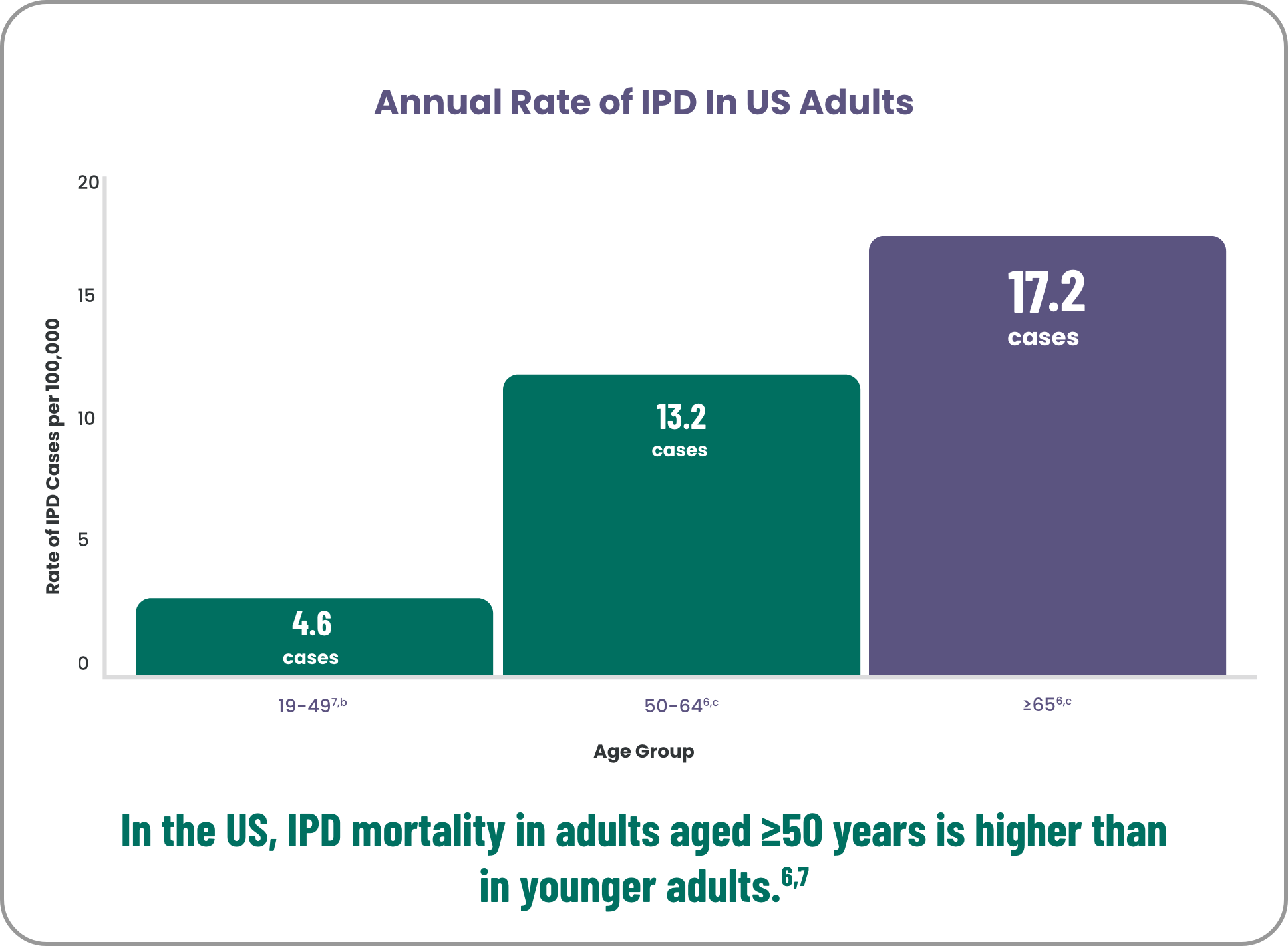
IPD, invasive pneumococcal disease.
a The same bacteria that cause pneumococcal pneumonia, Streptococcus pneumoniae, might invade normally sterile sites in the body, such as the blood or cerebrospinal fluid causing IPD. IPD is a serious illness that can lead to hospitalization, complications including bacteremia and meningitis, and sometimes death.
b Based on CDC data for IPD incidence in 2019.
c Based on CDC data for IPD incidence in 2022.
These data may not reflect local pneumococcal disease epidemiology in the UAE. Regional variations may exist.
Study Design
- This is an analysis study that present PCV serotype coverage of older adults (primarily 65 years and older) from high income countries using the latest data available at time.3
- Countries were selected based on classification as high-income by the World Bank.3
- Data were obtained from multiple sources, including: Peer-reviewed publications (via targeted PubMed search), national surveillance reports, on-line databases (e.g., ECDC), direct communication with in-country investigators affiliated with surveillance systems or hospitals.3
- A total of 33 high-income countries met the inclusion criteria.3
- IPD cases in older adults were reported for individuals aged ≥65 years, with the exception of Chile, Germany, and Uruguay (≥60 years), and Singapore (≥50 years). Twenty-seven countries had data available for at least three years (with 54.5% providing data for 2016–2018), while four countries had data for two years, and two countries had data for one year.3
- In total, 52,905 IPD cases in older adults had an identified serotype.3
Included Countries
- Eligible countries had to report IPD cases in older adults through one of the following: a national, regional, or sentinel surveillance system, or a hospital network.3
- For countries that had introduced a pediatric PCV into the national immunization program (NIP), inclusion required reporting of IPD cases after vaccine introduction.3
- Countries without a pediatric PCV in the NIP were also eligible for inclusion.3
- A minimum threshold of more than 20 IPD cases reported during the inclusion period was required for a country to be included.3
Data Selection
- Inclusion criteria for data used in this analysis: for countries with more than one data source reporting IPD cases, the source with the largest number of cases was selected; and cases from the three most recent years of data available were selected (if three years were not available, all available data were selected).3
- Exclusion criteria for data used in this analysis: the anatomical source of pneumococcal isolates was not specified; non-sterile/sterile site isolates were not differentiated; and IPD cases were not stratified by age or serotype.3
Data Collection and Analysis
- IPD case counts for each serotype in older adults were extracted from data covering up to the three most recent years available.3
- Average percentages of IPD attributed to individual serotypes and pneumococcal conjugate vaccine (PCV) formulations were computed.3
- These averages were stratified by World Health Organization (WHO) region and by the duration of pediatric PCV implementation in the national immunization program (NIP).3
- For each country, the proportion of serotyped IPD cases attributable to vaccine-covered serotypes was calculated.3
- Cases with missing serotype information or identified as non-typeable (NT) were excluded from the denominator in these calculations.3
References
- European Centre for Disease Prevention and Control. Surveillance Atlas of Infectious Diseases. Invasive pneumococcal disease. Accessed 26 September 2025. https://atlas.ecdc.europa.eu/public/index.aspx.
- Centers for Disease Control and Prevention. (2024). ABCs bact facts interactive data dashboard: SPN serotypes 1998–2023. Accessed 26 September 2025. https://www.cdc.gov/abcs/bact-facts/data-dashboard.html.
- Grant, L. R., Slack, M. P. E., Theilacker, C., et al. (2023). Distribution of serotypes causing invasive pneumococcal disease in older adults from high-income countries and impact of pediatric and adult vaccination policies. Vaccine, 41(38), 5662–5669.
- European Centre for Disease Prevention and Control. (2025). Invasive pneumococcal disease. Annual Epidemiological Report for 2022.
- European Centre for Disease Prevention and Control. (2023). Pneumococcal disease factsheet for health professionals. Accessed 26 September 2025. https://www.ecdc.europa.eu/en/pneumococcal-disease/facts.
- Kobayashi, M., Leidner, A. J., Gierke, R.,et al. (2025) Expanded recommendations for use of pneumococcal conjugate vaccines among adults aged ≥50 years: Recommendations of the Advisory Committee on Immunization Practices — United States, 2024. Morbidity and Mortality Weekly Report, 74(1), 1–9.
- Centers for Disease Control and Prevention. (2024). Use of 21-valent pneumococcal conjugate vaccine (PCV21) among adults aged ≥19 years: Evidence to recommendations (EtR). U.S. Department of Health and Human Services. Accessed 26 September 2025. https://www.cdc.gov/acip/grade/pcv21-adults-19- and-older.html#:~:text=ACIP%20reviewed%20the%20results%20of,receive%20a%20dose%20of%20PCV.
- Gierke, R., Wodi, A. P., & Kobayashi, M. (2024). Pneumococcal disease. In Epidemiology and prevention of vaccine-preventable diseases (14th ed., Chap. 17). Centers for Disease Control and Prevention. Accessed 26 September 2025. https://www.cdc.gov/pinkbook/hcp/table-of-contents/chapter-17-pneumococcal-disease.html
- Centers for Disease Control and Prevention. (2024). Pneumococcal disease: Clinical features. Accessed 26 September 2025. https://www.cdc.gov/pneumococcal/hcp/clinical-signs/
AE-NON-00601 | Expiry Date: 26/09/2027